In Their Shoes
Leo is annoyed with Sami, the new boy. In class Sami never answers questions, and in football he doesn't call for the ball. "He's rude," says Leo. "He won't even talk to us." Then the teacher tells the class something Leo didn't know: Sami's family arrived from another country three weeks ago, and Sami is still learning the language.
Imagining their side
Suddenly Leo sees it differently. He imagines being in a school where everyone talks fast in a language he hardly knows. Questions come and he can't follow them. He'd be afraid of saying something wrong in front of everyone. He might keep quiet too.
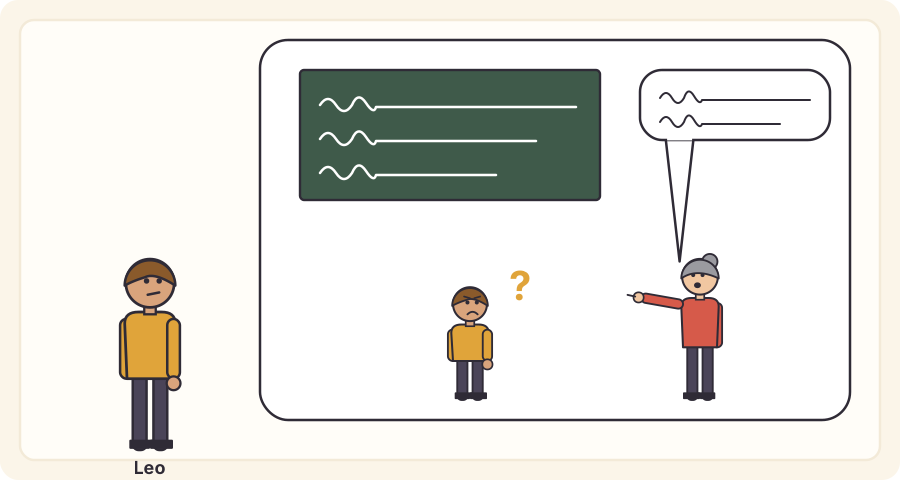
Imagining how things are for someone else, and feeling something of what they feel, is called empathy. People often say "putting yourself in their shoes". The Golden Rule lesson asked you to swap places completely, imagining the other person's wishes, not your own. Empathy is how you do that swap.
Why empathy matters
Empathy does two jobs. First, it shows you facts you had missed: Sami isn't rude, he is struggling. Many unkind judgements, like Leo's, come from not seeing the other side. Second, it moves you. Once Leo feels a little of Sami's fear, he wants to help: he starts passing Sami the ball and showing him where things are.
If I were in Sami's place, I would feel lost and afraid.
Sami is in that place.
So Sami probably feels lost and afraid, and could use a friend.
Where empathy runs short
Empathy has a weakness. It is strong for people close to us, people like us and people we can see, and weak for people far away, different from us or only in numbers. One child in a photo can move us more than a news story about thousands. A friend's small trouble can feel bigger than a stranger's big one.
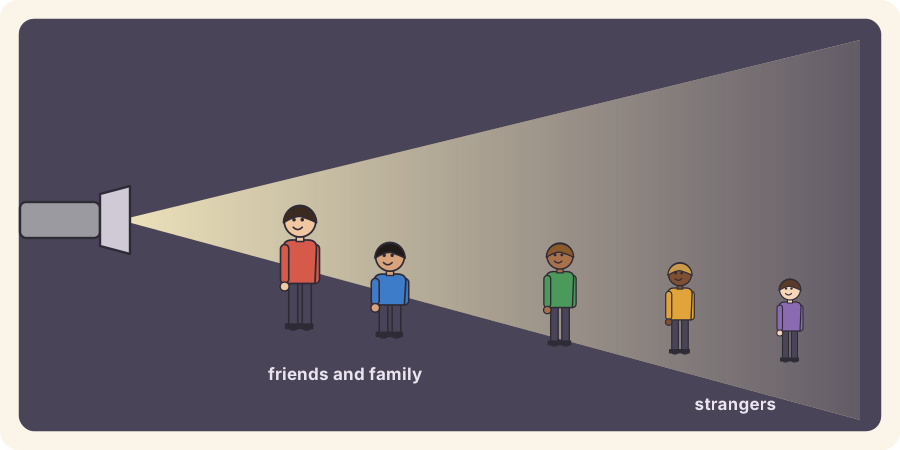
That is why empathy needs reasons too. The Greatest Good lesson asked us to count each person once, whether we feel for them or not, and the Treat Like Cases Alike lesson asked whether a difference really matters. Empathy shines a torch; reasons remind us that people in the shadow count just as much.
Try it at home
- Think of someone who annoyed you recently.
- Write three things that might be true about their day, their life or their worries that you don't know.
- Does any of them change how you see what they did?
Words to know
- empathy - imagining how things are for someone else, and feeling something of what they feel
Big idea
Empathy - putting yourself in someone's shoes - shows you what you had missed and moves you to act. But it shines brightest on people near us, so it works best together with reasons that count everyone.