Fair Shares
Lena, Kofi and Mei have baked a cake together for a picnic. Lena did most of the work: she found the recipe, bought the flour and did the mixing. Kofi missed lunch and is very hungry. Mei only came at the end to help with the icing. There are six slices. What is a fair way to share them?
Three ideas of fair
Ask a few people and you will hear at least three different answers, each with a reason behind it:
- Equal shares: two slices each. They are all friends, all baked it, and all came to the picnic. Nobody counts for more than anyone else.
- Shares by need: Kofi gets more, because he is the hungriest. The cake matters more to him today than to the others.
- Shares by effort: Lena gets more, because she did most of the work. It is fair that what you put in counts for what you get out.
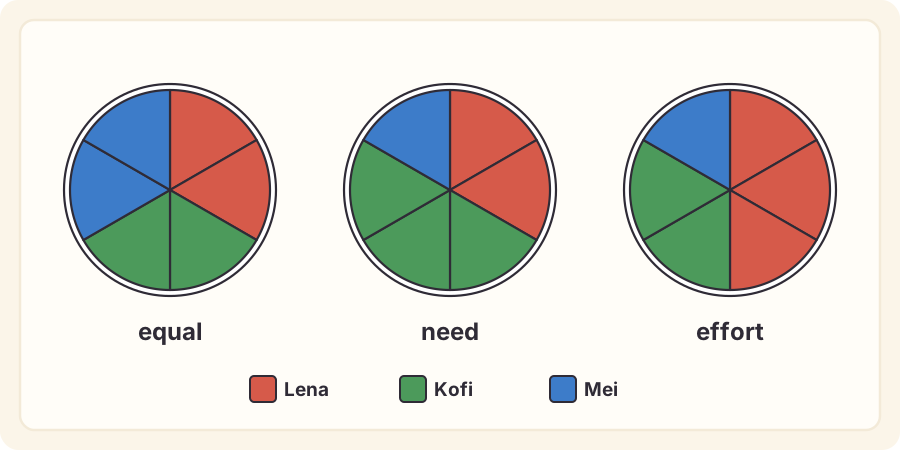
Being fair means giving each person what they are due, with no favourites. The hard part is that "what they are due" has more than one answer. Equal shares, need and effort are all real reasons, and in different situations different ones seem to matter most. In a race the fastest gets the prize (effort and skill); in a lifeboat the weakest are helped first (need); at a vote everyone gets one vote (equal).
Unfair is easier to see
People who disagree about which idea of fair to use still agree about a lot. It would be unfair for Lena to take four slices because she is the tallest, or for Mei to get more because she is Lena's cousin. Those reasons aren't about equality, need or effort at all. As the Treat Like Cases Alike lesson showed, a difference has to matter to justify treating people differently.
A fair way to decide
When people can't agree on the result, they can often agree on a fair way of deciding. An old trick for sharing between two: one person cuts, the other chooses. The cutter has every reason to cut as evenly as possible, because they will get the piece that is left.
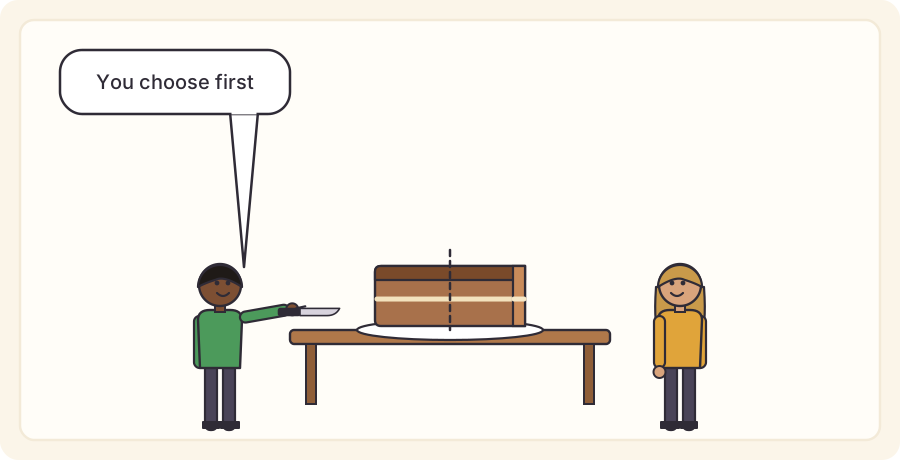
Taking turns, drawing lots and voting are other fair ways of deciding. A fair way gives everyone the same chance, even when the result can't please everyone.
Try it at home
- Think of something that was shared at home or at school: time on a computer, jobs, sweets, seats.
- Was it shared equally, by need, or by effort?
- Would one of the other ideas have been fairer? Write your reason.
Words to know
- fair - giving each person what they are due, with no favourites
- equal shares, need, effort - three different reasons people give for what someone is due
Big idea
Fairness has more than one face: equal shares, need and effort are all real reasons. When people can't agree on the result, a fair way of deciding - one cuts, the other chooses - can still be agreed.