Habitats and Ecosystems
Turn over a flat stone in a garden and you find a small world: woodlice, an earthworm, damp soil, the cool dark under the stone. Lift your eyes and the same thing happens on a bigger scale: a pond, a forest, a desert, each with its own mix of life. What ties all of these living things to the place they live, and to each other?
Myth or fact? An ecosystem is just the animals and plants that live in a place.
A home: the habitat
A habitat is the place where a living thing makes its home. A good habitat gives it what it needs to stay alive: food, water, shelter and space, each in the right amount.1 A camel's habitat is a hot, dry desert; a trout's is a cold, clean river. Take a trout out of its river and put it in the desert, and it soon dies - not because it is weak, but because that is not its habitat.
The whole place: the ecosystem
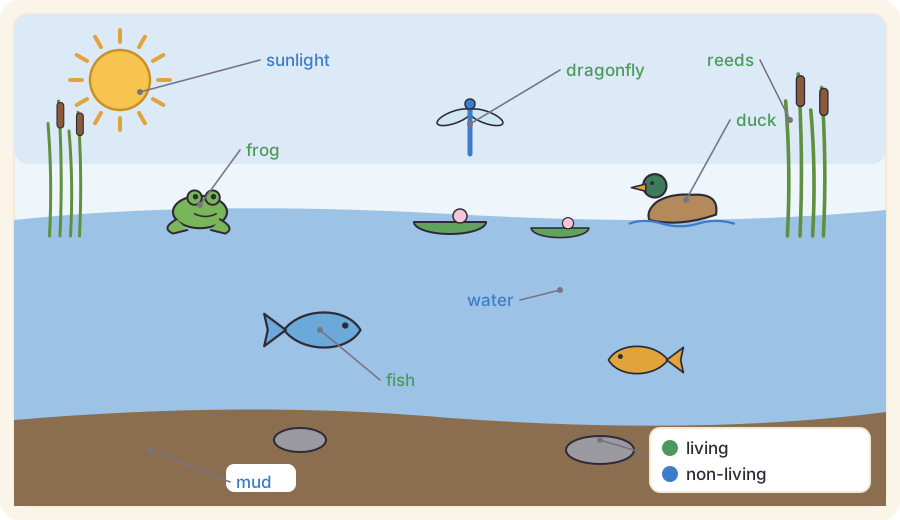
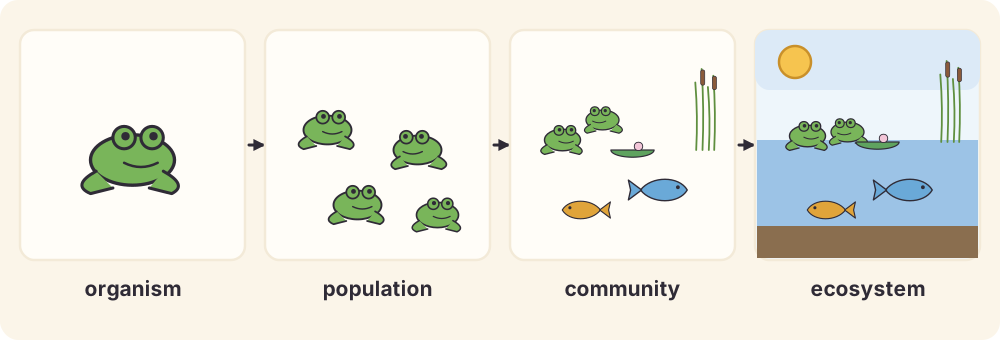
Zoom out from one animal to the whole place. All the frogs in a pond form a population (all the living things of one kind in one place). All the populations in the pond together - frogs, fish, reeds, water beetles, the tiny green algae - form a community. An ecosystem is that community and the non-living things around it: the water, mud, rocks, air, sunlight and temperature, and the way they all act on each other.2
Show the answer
Myth. An ecosystem also includes the non-living parts - water, soil, air, light, temperature. They matter as much as the living ones: change the water's temperature or how much light reaches it, and which living things can live there changes too.
The living and non-living parts act on each other all the time. Plants take water and minerals from the soil; fallen leaves rot and become soil again; trees shade the ground and keep it cool and damp, so a different set of plants grows beneath them.
Ecosystems big and small
An ecosystem can be as small as a puddle or as big as an ocean. Scientists draw the edges where it is useful to study. Along the southern shore of the Caspian Sea, in Iran and Azerbaijan, the Hyrcanian forests stretch for about 850 km. Their history goes back 25 to 50 million years, and they were named a UNESCO World Heritage Site in 2019.3 More than 3,200 kinds of plants grow there, along with 180 kinds of birds and 58 kinds of mammals - among them the Persian leopard.3
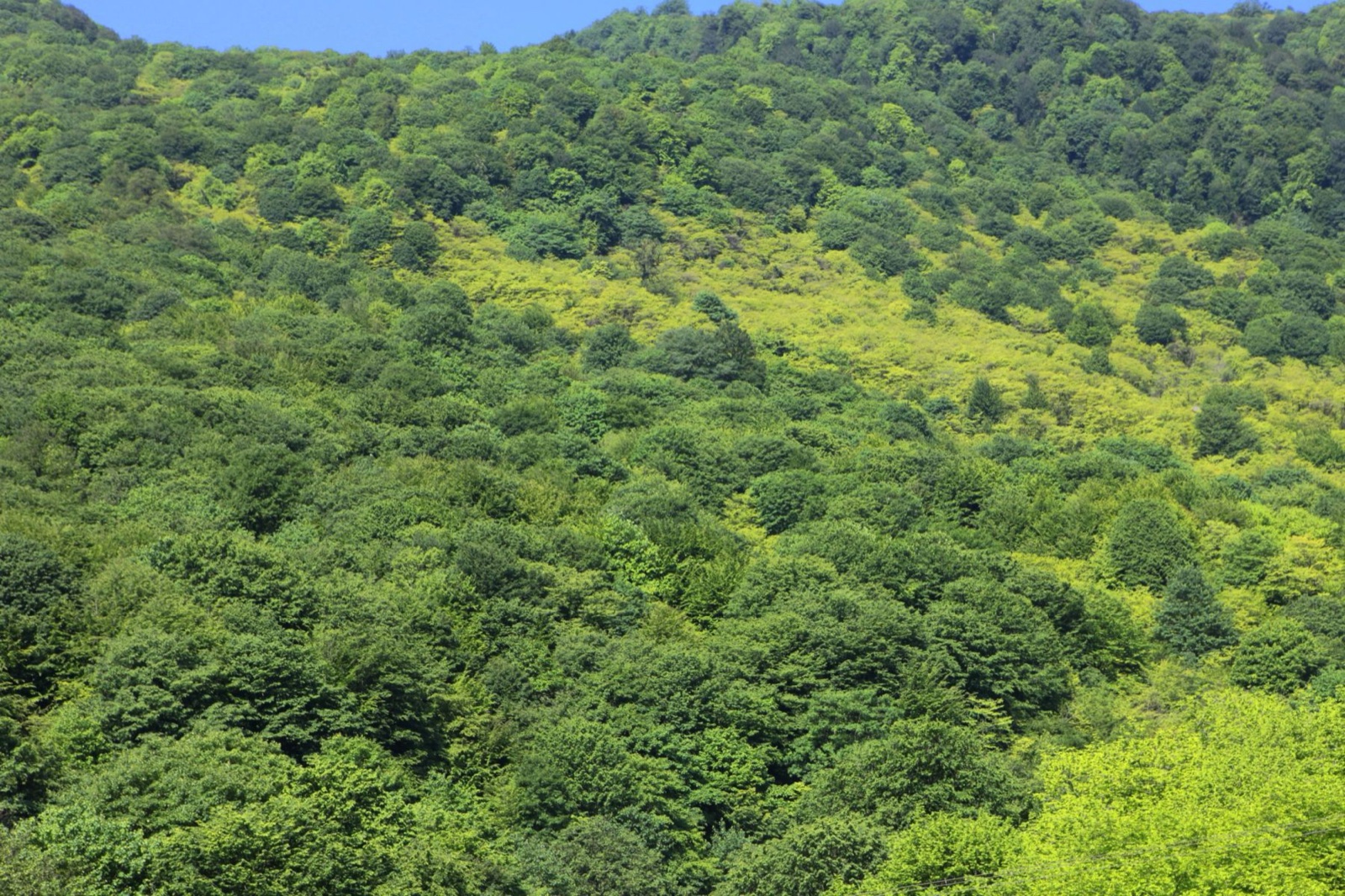
Hyrcanian forest in Mazandaran, northern Iran, in May. Photo: Ninara, CC BY 2.0, via Wikimedia Commons; resized.

A desert is an ecosystem too, with little water and big swings of temperature, and its living things - date palms, lizards, beetles, foxes with large ears that shed heat - are the ones that can live with that.
Try it yourself
Pick a small patch outdoors: under a tree, a corner of a park, the edge of a pot plant. In ten minutes, make two lists: the living things you can see (count the tiny ones too), and the non-living things they depend on. Then pick one living thing and write how it uses something from the other list.
Words to know
- habitat - the place where a living thing makes its home, giving it food, water, shelter and space
- population - all the living things of one kind in one place
- community - all the populations of different kinds living in one place
- ecosystem - a community together with the non-living things around it, all acting on each other
Big idea
An ecosystem is living things and their non-living surroundings working as one system - change one part and the rest feels it.
Sources
-
National Geographic Education, Habitat (encyclopedic entry). ↩
-
OpenStax, Biology 2e, 46.1 Ecology of Ecosystems (textbook, CC BY 4.0). ↩
-
IUCN World Heritage Outlook, Hyrcanian Forests (site assessment). ↩ ↩2