Metals and Non-metals
Tom's family cooks rice in a metal pot with a plastic handle. In Materials and Their Properties we saw why: the metal carries the heat of the stove to the rice, and the plastic handle stays cool enough to hold. Iron, copper, aluminium and gold are all metals, and all of them are elements. So are oxygen, carbon and sulfur, but they are nothing like metals. Can we sort the elements into two big groups?
What metals are like
A metal is an element that is:
- shiny when it is clean or freshly cut
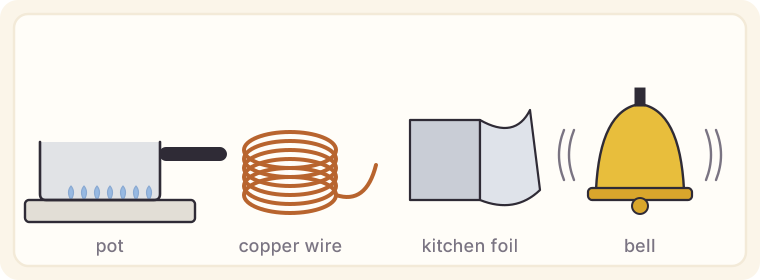
- a good carrier of heat and electricity: that is why pots and electric wires are made of metal
- bendy: you can hammer it flat or pull it into a wire without it breaking into pieces
- often heavy and hard, and it makes a ringing sound when you hit it
Most elements are metals: about four out of every five. Nearly all of them are solid at room temperature. The one famous exception is mercury, a metal that is a liquid.
Here is one thing metals are not all like. Many people think every metal sticks to a magnet. In fact only a few do, most of all iron (and steel, which is mostly iron). Aluminium, copper, gold and silver don't stick to a magnet at all.
What non-metals are like
A non-metal is an element that is not a metal. Non-metals are much more varied than metals. Many are gases, like oxygen and nitrogen in the air. One, bromine, is a liquid. The solid ones, like carbon and sulfur, are usually dull rather than shiny, and they crumble or snap instead of bending. Most non-metals carry heat and electricity badly.
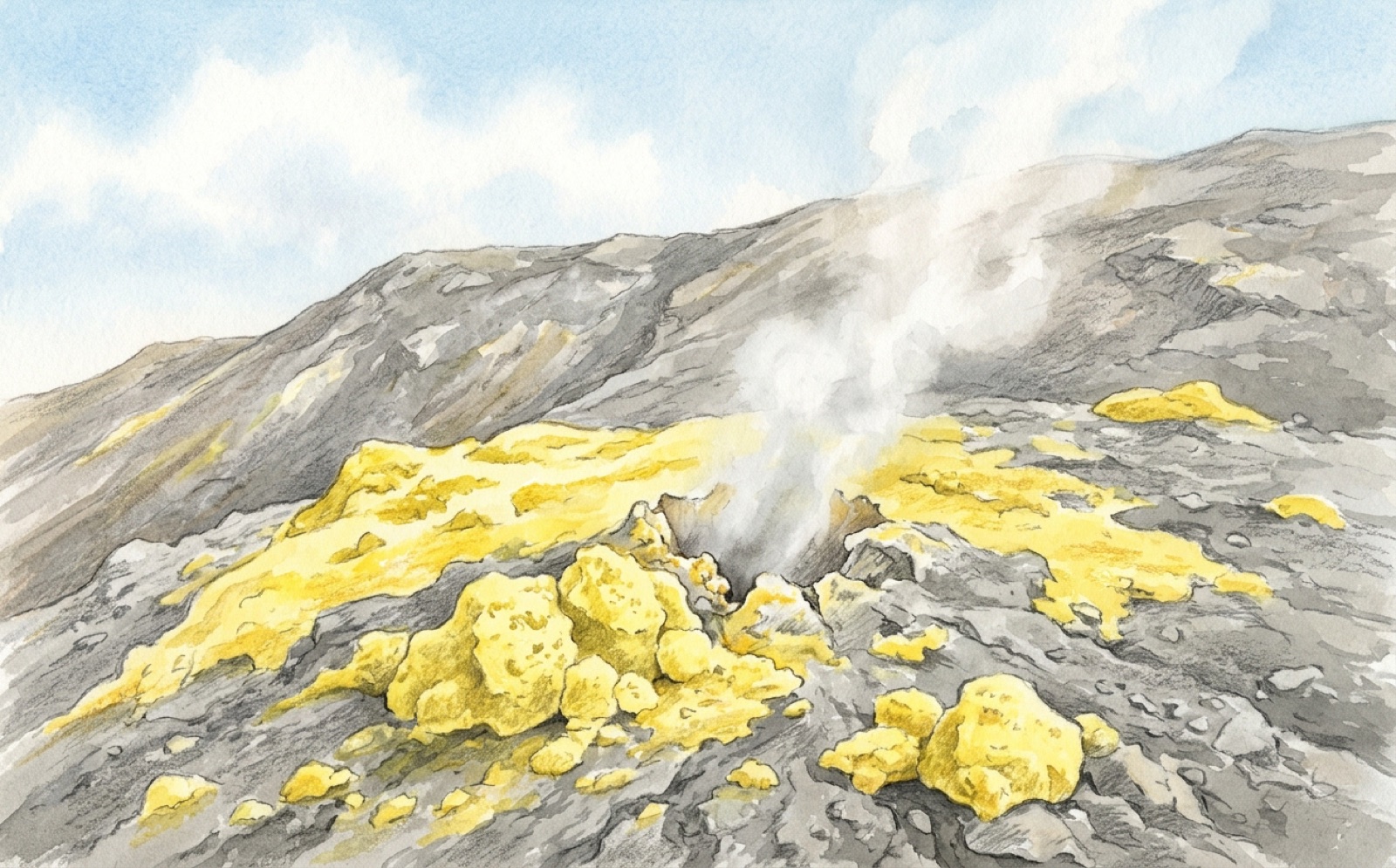
Picture: an illustration of sulfur around a steaming vent on a volcano. It forms dull, crumbly yellow lumps.
Where they are in the table
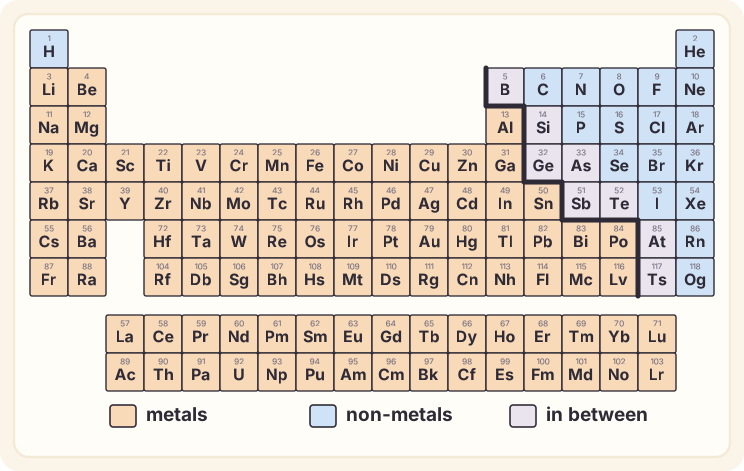
The periodic table shows the two groups at a glance. The metals fill the left side and the whole middle. The non-metals are on the right, cut off from the metals by a line that runs down like a staircase. Hydrogen is a non-metal too, even though it sits at the top left. A few elements right next to the staircase are in between, a little like both.
Try it at home
- Collect a few things: an iron nail or a steel paper clip, a piece of kitchen foil, a pencil, a plastic spoon, and if you can, a coin.
- Hold a fridge magnet near each one.
- Which stick to the magnet? Which are shiny? Which bend without breaking?
The nail or paper clip sticks to the magnet. The foil is a metal too, shiny and bendy, but it doesn't stick. The pencil's grey tip is carbon, a non-metal: dull and easy to snap.
Words to know
- metal - an element that is usually shiny and bendy, and carries heat and electricity well, like iron, copper or gold
- non-metal - an element that is not a metal; many are gases, and the solid ones are usually dull and crumbly, like carbon or sulfur
Big idea
Most elements are metals: shiny, bendy, and good carriers of heat and electricity. The non-metals sit on the right of the periodic table and are very different, and only a few metals, like iron, stick to a magnet.