Making New Stuff
Kofi leaves his bicycle out in the rain all winter. In spring the shiny chain is covered in a flaky, orange-brown crust. The crust is not dirt, and it is not paint. It is rust, and it was not there in the autumn. Where did this new stuff come from, and how can you tell when new stuff is being made?
What a chemical reaction is
In Two Kinds of Change we saw that a chemical change makes new stuff. Chemists call the process a chemical reaction: substances meet, and they turn into different substances.
The substances you start with are called the reactants. The new substances you end up with are called the products. For rust, the reactants are the iron of the chain, a gas in the air called oxygen, and water. The product is rust. Rust is nothing like iron: iron is hard, grey and strong, while rust is orange-brown, crumbly and weak.
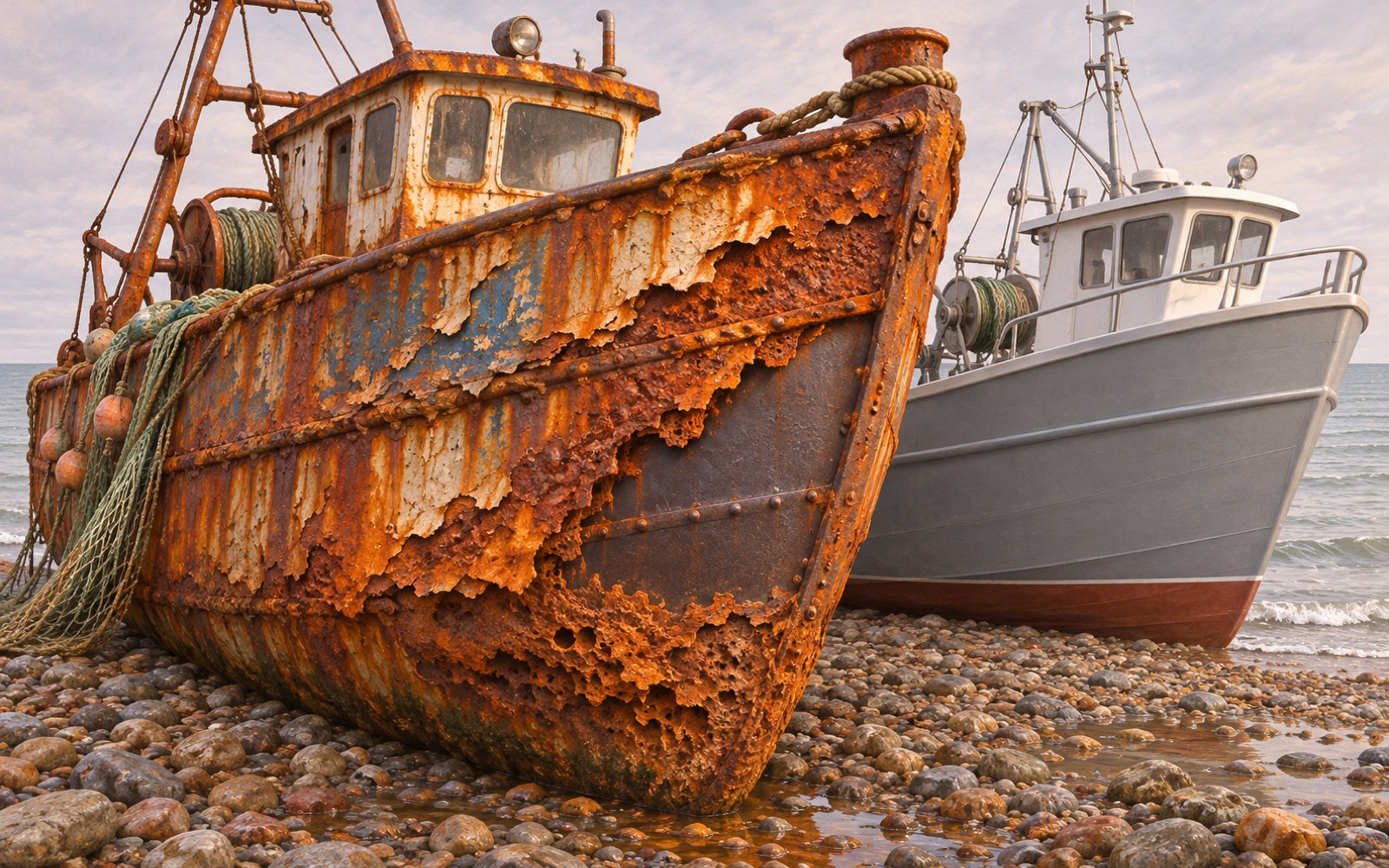
Picture: an illustration of an old iron boat covered in rust, next to a newly painted one.
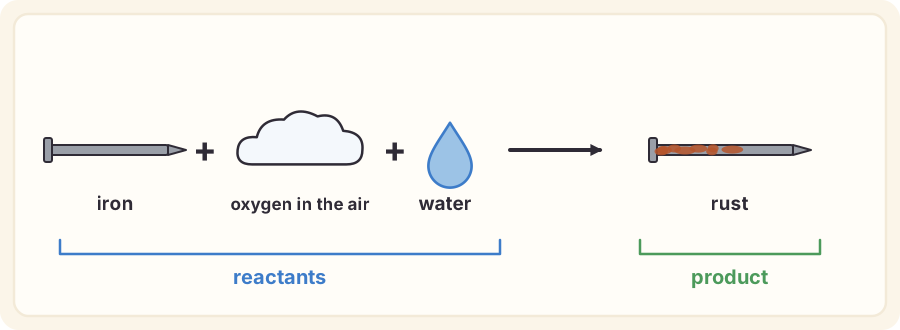
We write a reaction as an arrow, reactants on the left and products on the right:
iron + oxygen + water → rust
Read the arrow as "turn into". Rusting is slow: it takes days or weeks. Other reactions take less than a second.
The signs of a reaction
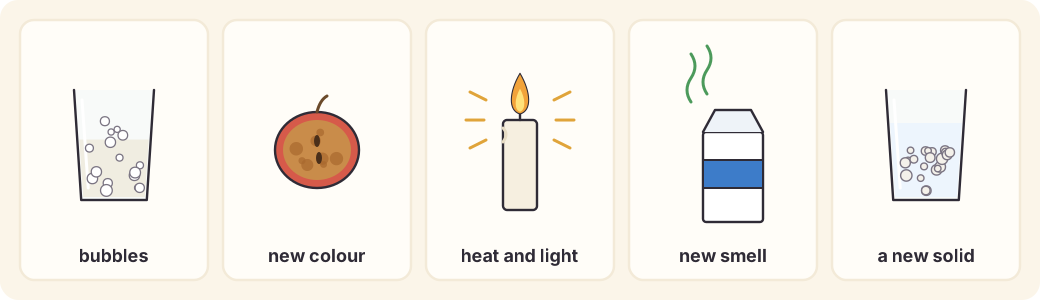
You can't watch the new stuff being made, but you can often see clues that a reaction is happening. Look for:
- Bubbles of a gas that wasn't there before, like baking soda fizzing in vinegar.
- A new colour, like a cut apple turning brown, or the orange of rust.
- Heat or light given off, like a candle flame.
- A new smell, like milk that has gone sour.
- A solid appearing in a clear liquid, or a solid disappearing without dissolving.
Clues, not proof
A sign is a clue, not a proof. Water boiling in a pan makes bubbles, but it is still water: the bubbles are water vapour, and it is a physical change. A light bulb gives off light and heat, but nothing new is made inside it. So when you see a sign, ask the question from the last lesson: is there new stuff here that wasn't there before?
Try it at home
- Put two spoons of baking soda in a glass, standing in a bowl or a sink.
- Pour in a little vinegar and watch.
- Hold your hand near the outside of the glass. Does it feel colder?
- Cut an apple in half. Leave one half on a plate, and look at it again after an hour.
The fizzing is a gas called carbon dioxide, made by the reaction between the baking soda and the vinegar. Many people find the glass gets a little colder: some reactions take in heat instead of giving it off. The apple turns brown because its cut face reacts with the oxygen in the air.
Careful
Only taste food. Never mix cleaning products from around the house to see what happens: some of them make poisonous gases.
Words to know
- chemical reaction - a process where substances turn into different substances
- reactants - the substances you start with
- products - the new substances that are made
Big idea
In a chemical reaction, the reactants turn into new products. Bubbles, a new colour, heat or light, a smell or a new solid are clues that a reaction is happening, but the real test is whether new stuff has been made.