Evaporating and Condensing
After a rain shower in the morning, Kofi sees a big puddle on the path to his school. By the afternoon, the sun is out and the puddle is gone. Nobody mopped it up. Where did the water go?
Liquid to gas: evaporating
The water in the puddle turned into a gas and went into the air. A liquid slowly turning into a gas at its surface is called evaporating. Water as a gas is called water vapour, and it is invisible: you can't see it, but the air around you always holds some.
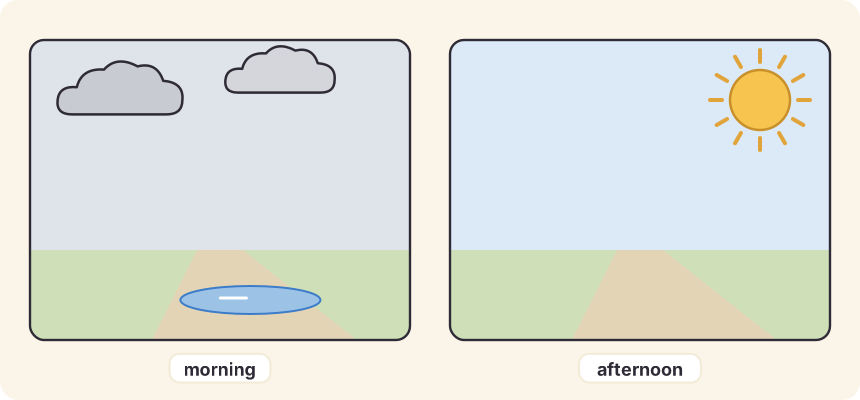
Evaporating happens at any temperature, even on a cold day, but it goes faster when it is warm, when the wind blows, and when the water is spread out thin. That is why washing hung on a line dries fastest on a warm, windy day, and why a wet towel left in a heap stays wet for hours.
Heating hard: boiling
In Melting and Freezing we saw that ice melts at 0 °C. Heat the water further, in a saucepan on a stove, and at 100 °C (212 °F) something new happens. Bubbles form inside the water, rise and burst. The water is boiling: it is turning into a gas everywhere inside it, not only at the surface. The temperature at which a liquid boils is its boiling point. For water at sea level it is 100 °C. High on a mountain, where the air presses down less, water boils at a lower temperature.
The bubbles in boiling water are not air. They are bubbles of water vapour.
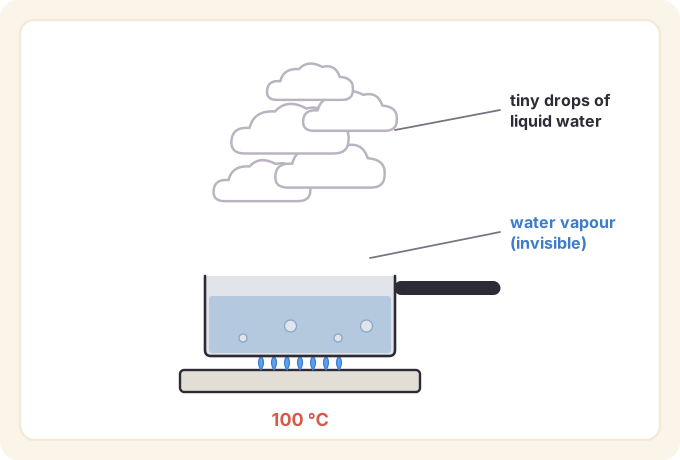
Look closely at a boiling pan and you will see a clear gap just above the water, under the white cloud. The clear gap is water vapour, which is invisible. The white cloud is something else: tiny drops of liquid water, formed when the water vapour met the cooler air and turned back into a liquid.
Gas to liquid: condensing
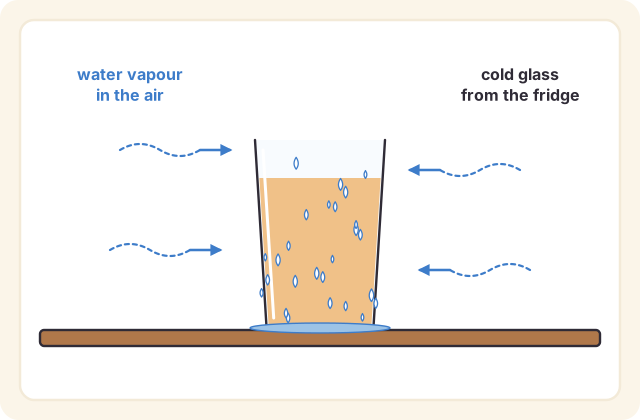
Water vapour turning back into liquid water is called condensing. It happens when water vapour touches something cold.
Take a cold drink out of the fridge on a warm day. Soon the outside of the glass is covered in drops. The water didn't leak through the glass. The air around the glass holds water vapour, and when it touches the cold glass it condenses into drops. The mist on a bathroom mirror after a hot shower, and the drops on a car window on a cold morning, are condensing too.
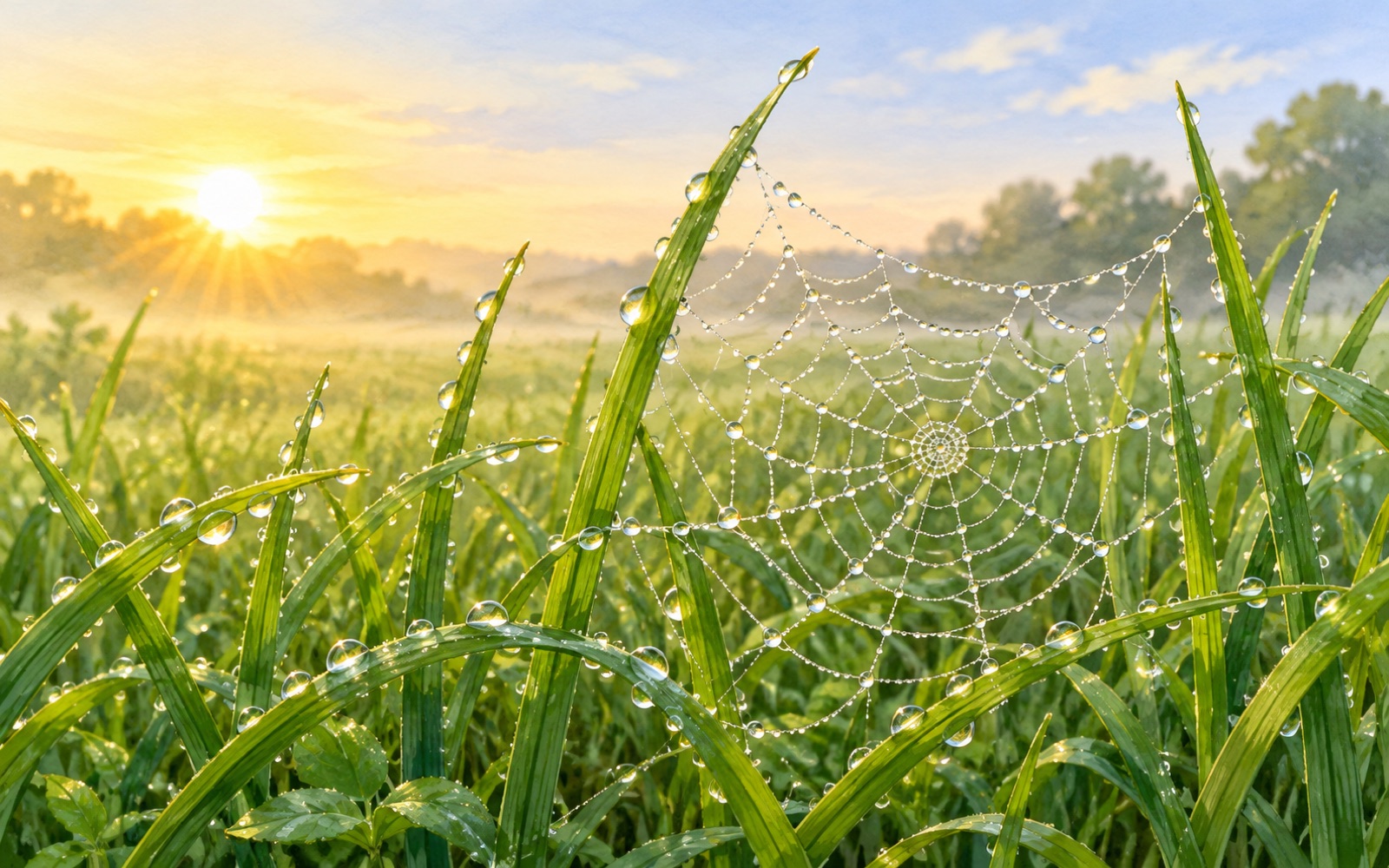
Picture: an illustration of dew at sunrise. Dew is condensing too: on a clear night the grass gets cold, and water vapour from the air condenses on it.
Try it at home
- Pour the same small amount of water onto two plates. Put one in a warm, sunny place and one in a cool, shady place.
- Check them every hour. Which one dries first?
- Take a glass of very cold water from the fridge and leave it on the table. Watch the outside of the glass for ten minutes.
The water on the warm plate evaporates first. Drops appear on the outside of the cold glass, condensed from water vapour in the air.
Careful
Don't touch a boiling pan or the steam above it, and only boil water with an adult. Steam can burn badly.
Words to know
- evaporating - a liquid slowly turning into a gas at its surface
- water vapour - water as a gas; it is invisible
- boiling - a liquid turning into a gas everywhere inside it, with bubbles
- boiling point - the temperature at which a liquid boils (for water at sea level, 100 °C)
- condensing - a gas turning back into a liquid, usually when it touches something cold
Big idea
Water can turn into an invisible gas, water vapour, by evaporating slowly or by boiling. When water vapour cools, it condenses back into liquid water. The water is never lost; it only changes state.