Constellations
Lie on your back on a dark night and look at the stars for a while. Soon your eyes start joining them up: three in a row, a square, a curve like a hook. People have done this for thousands of years, all over the world.
Pictures in the stars
A group of stars that people joined into a picture and gave a name is called a constellation.
One of the easiest to find is Orion, the hunter. Look for three bright stars in a short straight row - his belt. Around them, four more bright stars make his shoulders and his knees. One shoulder, Betelgeuse, shines a little orange; one knee, Rigel, a little blue.
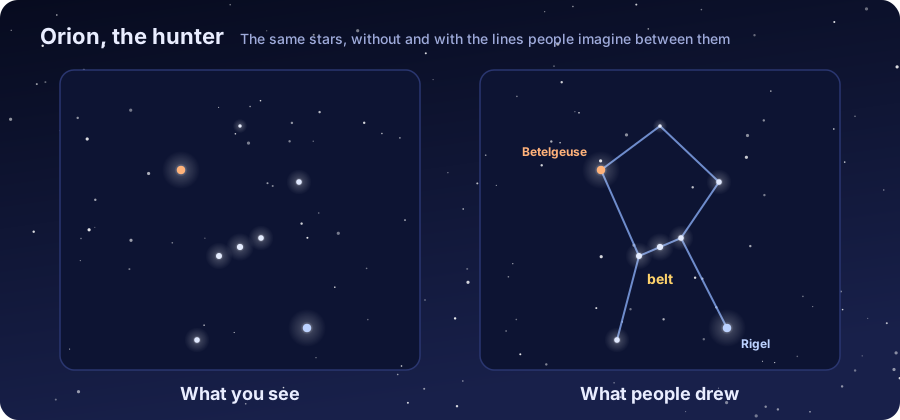
Nobody drew those lines in the sky. They are only in our imagination - which is why different people saw different pictures in the same stars. The seven stars that Americans call the Big Dipper (a big ladle for soup) are a plough in Britain and seven wise men in India.
Today astronomers all over the world use the same list of 88 constellations, so that "a star in Orion" means the same place in the sky for everyone.
Close together? Only from here
The stars in a constellation look like neighbours, but most of them aren't. In Orion, the belt stars are several times farther from us than Bellatrix, the star on his other shoulder. They only look close together because they are in nearly the same direction from the Earth.
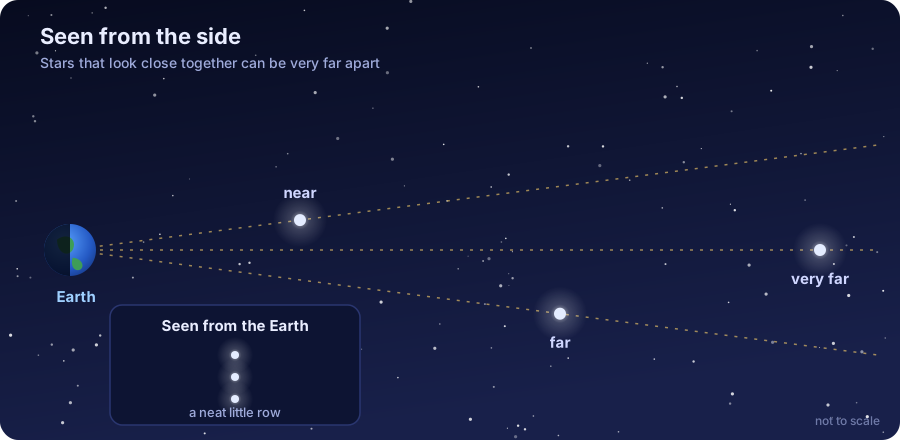
So a constellation is a picture that belongs to where we stand. If you could fly to another star and look back, the stars would be in different directions, and Orion would fall apart.
Different stars in different seasons
At night your side of the Earth faces away from the Sun, out into space. In the year lesson we followed the Earth around the Sun - and as it goes round, the night side faces a different part of the sky.
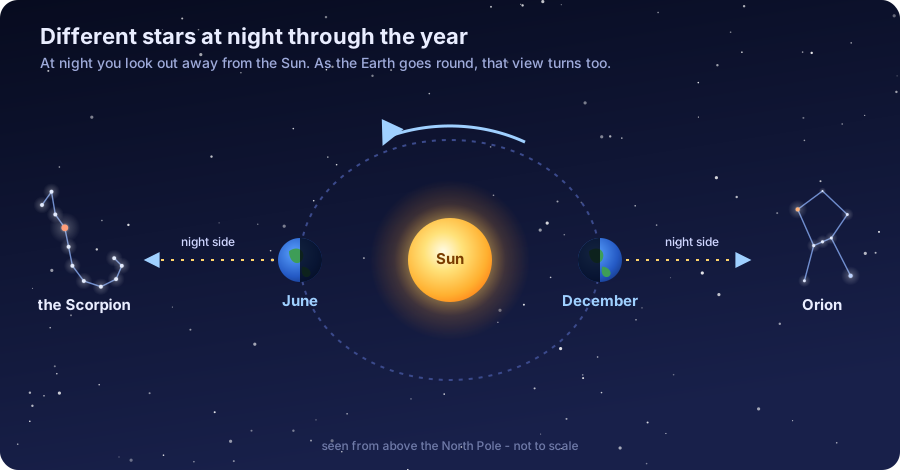
- In December the Earth is between the Sun and Orion. At night you face Orion, so it is up in the evening sky.
- In June the Earth is on the other side of the Sun. Now Orion is in the same direction as the Sun: it is up in the daytime, lost in the sunlight like every other star. At night you see other constellations instead, like the Scorpion.
That's why people long ago could tell the time of year from the stars: when Orion rises in the evening, winter is coming in the north.
Try it tonight
If you live in the northern half of the Earth, look north for the Big Dipper: seven bright stars, four for the bowl and three for the handle. Follow the two stars at the front edge of the bowl upward, about five times the gap between them, and you reach the North Star - the star the Earth's axis points at. Draw what you see, and look again at the same time of night in three months: the Big Dipper will have turned a quarter of the way around the North Star.
Words to know
- constellation - a group of stars that people joined into a picture and named, like Orion
Big idea
A constellation is a picture people imagined in the stars. Its stars only look close together from the Earth, and which ones we see at night changes as the Earth goes around the Sun.