The Year
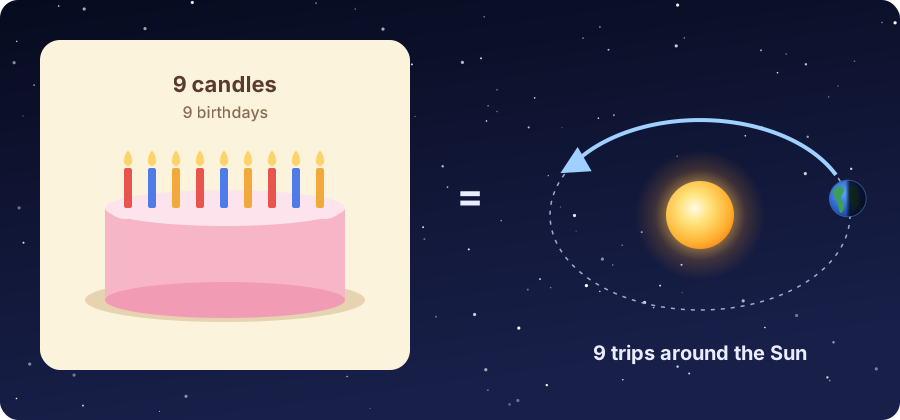
How old are you? Whatever the answer is, it is also the number of times you have travelled around the Sun.
The Earth's trip around the Sun
In the Day and Night lesson we saw that the Earth spins once a day. At the same time it does something else: it travels around the Sun, on a path that is almost a circle. That path is called its orbit.
One whole trip around the Sun takes one year.
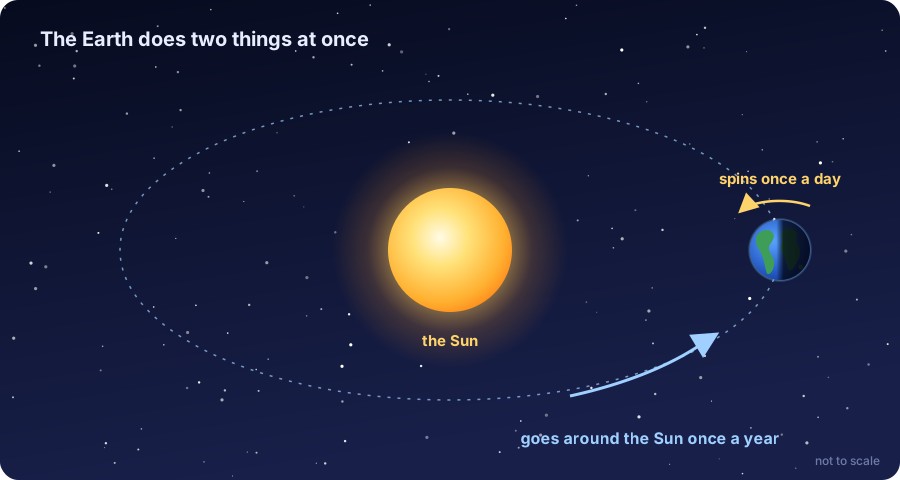
The Earth does both at once, like a spinning top that is also moving around a table: it spins about 365 times during one trip. That is why a year has about 365 days. You can't feel either motion, but the Earth carries you along the whole time.
Your birthday
On each birthday, the Earth is back at about the same place in its orbit as on the day you were born. So when someone turns 9, the Earth has carried them around the Sun 9 times.
The extra quarter day
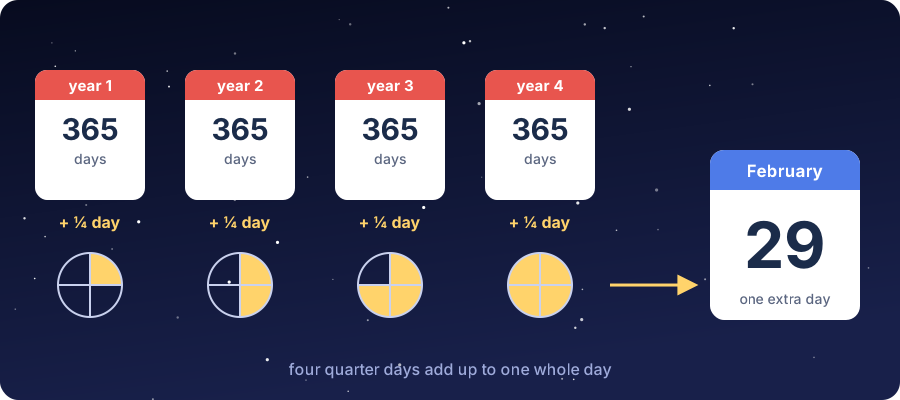
The trip doesn't take exactly 365 days. It takes about 365 days and 6 hours - a quarter of a day more.
A calendar can't have a quarter of a day, so most years get 365 days, and the leftover quarters pile up. After four years they make one whole day. That day is added to the calendar as 29 February, and a year that has it is called a leap year.
The real rule is a little cleverer than "every four years". We will work it out in a later course.
Try it at home
Put the lamp (the Sun) in the middle of a dark room. Hold the orange (the Earth) and walk slowly in a circle around the lamp, turning the orange as you go. One walk around the lamp is a year; each turn of the orange is a day.
Words to know
- orbit - the path one object follows around another, like the Earth around the Sun
- year - one trip of the Earth around the Sun, about 365 and a quarter days
- leap year - a year with an extra day, 29 February
Big idea
While the Earth spins once a day, it also travels around the Sun. One trip takes a year - about 365 and a quarter days - and the extra quarters become a leap day about every four years.