The Moon
A light in the dark
Picture driving at night on a country road in Canada, far from any town. There are no street lamps - only forest on both sides and your headlights. On a night with no Moon, everything past the headlights is black. On a night with a full Moon, you can see the road ahead, the trees, the fields, even your own shadow.
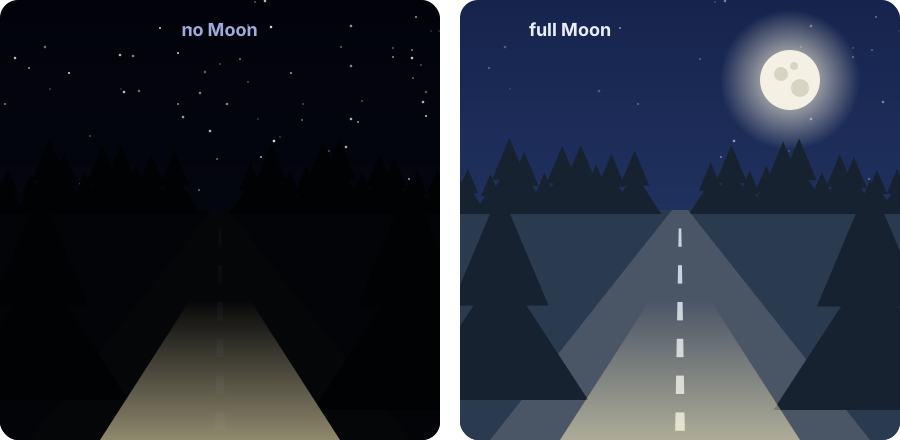
If you live in a city, with lamps on every street, you may never have noticed how much light the Moon gives. But for almost all of history there were no street lamps anywhere, and on a clear night the Moon was the brightest light there was.
The Earth's companion
The Moon is a ball of rock, about a quarter as wide as the Earth. It travels around the Earth, about once a month.
Up close: craters and mountains
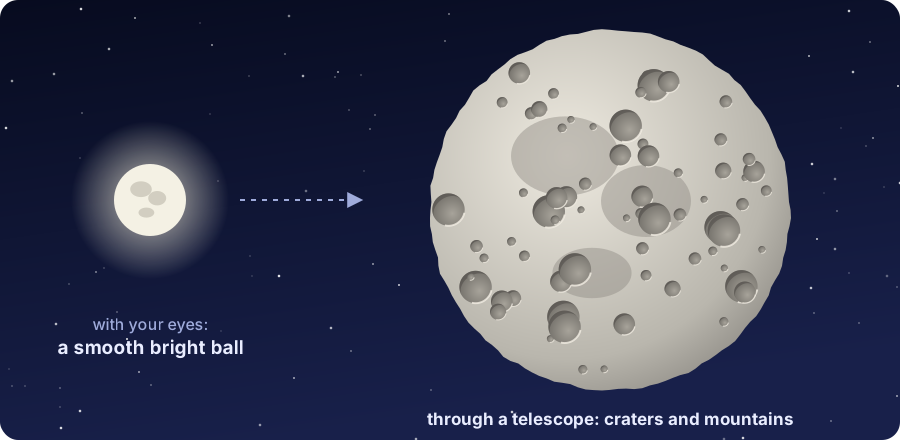
With your eyes, the Moon looks like a smooth, bright ball with a few grey patches. It is a ball, but not a smooth one. Look at it through a telescope (an invention we will talk about later: something we can use to look at objects in the sky by magnifying them, making them look bigger) and you see that its surface is rough. It is covered in craters - round holes, some wider than a whole city - and it has mountains too.
Moonlight is sunlight
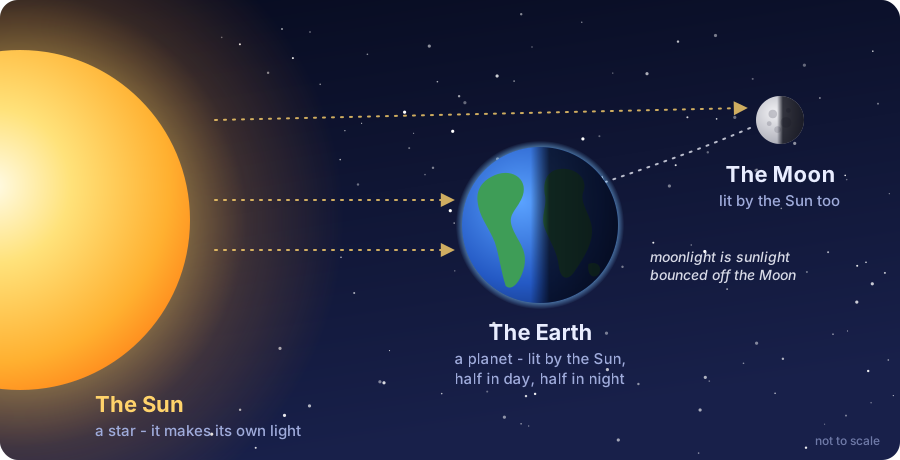
Here is the surprise: the Moon makes no light of its own. Moonlight is sunlight that has bounced off the Moon's grey rocks and come to us. Like the Earth, the Moon always has one half lit by the Sun and one half dark.
Not only at night
The Moon is up in the daytime about as often as at night. Next time you are outside in the afternoon, look for a pale Moon in the blue sky.
Try it at home
Find a lamp (the Sun) and an orange (the Earth or the Moon). In a dark room, hold the orange near the lamp: one half is bright, one half is dark. That is what the Sun does to the Earth and the Moon.
Words to know
- moon - an object that travels around a bigger one, the way our Moon travels around the Earth
- crater - a round hole in the ground, like the ones that cover the Moon
Big idea
The Moon is a ball of rock that goes around the Earth and lights our nights. Its light is really sunlight, bounced off its rocks.