Day and Night
Every morning the Sun comes up on one side of the sky, climbs, and goes down on the other side in the evening. For thousands of years most people took the obvious explanation: the Sun travels around the Earth once a day.
It turns out the Sun isn't the one moving. We are.
The Earth spins
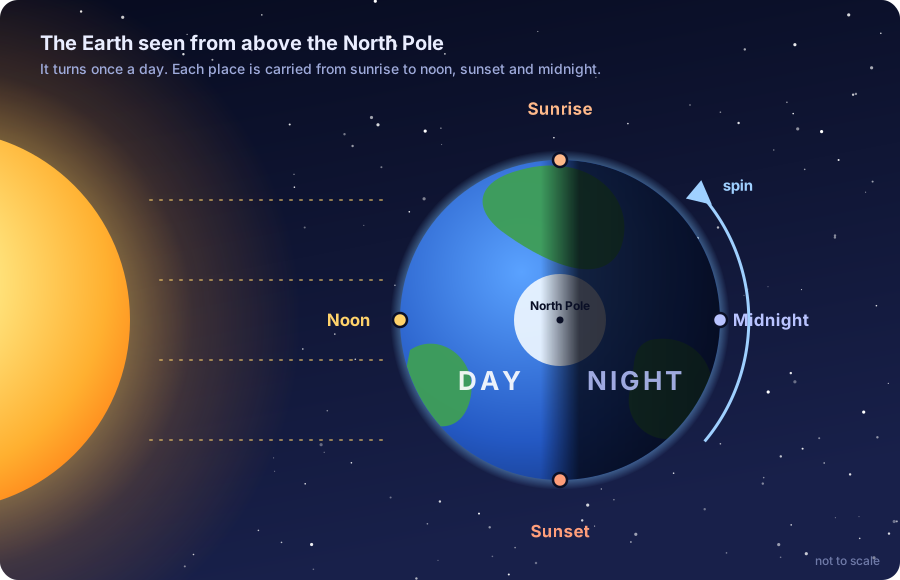
Remember from the Earth lesson: the Earth is a ball lit by the Sun, so half of it is always in sunlight and half in shadow. The Earth also spins around itself, like a turning top, once about every 24 hours.
Now put those two facts together:
- The half of the Earth facing the Sun has day.
- The half facing away has night.
- As the Earth turns, you are carried from the dark half into the light half - that is sunrise - and later from the light half back into the dark - that is sunset.
The Sun hasn't moved at all. You have.
The Earth also travels around the Sun, but one trip takes a whole year - far too slow to make day and night. We will come back to that trip in the next lesson.
Why it looks like the Sun is moving
You have felt this on a train. When your train pulls away smoothly, for a moment it looks as if the platform is sliding backwards and you are standing still. Your eyes can't tell who is moving - only that something is.
Standing on the spinning Earth is the same. We turn, and the Sun seems to slide across the sky the other way.
East to west
The Earth spins from west to east. As your part of the Earth turns toward the east, the Sun comes into view over the eastern horizon. As you keep turning, it climbs, crosses the sky, and finally drops out of view in the west.
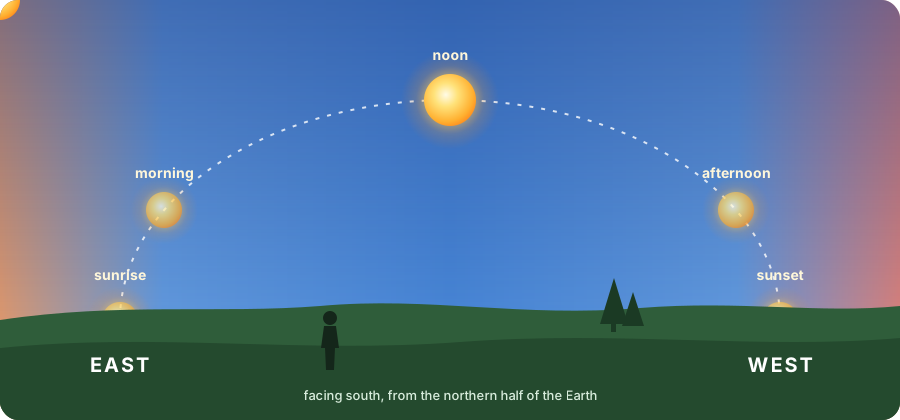
It isn't only the Sun. The Moon and the stars rise in the east and set in the west too, for exactly the same reason: the same spin carries us past all of them. (What the stars really are comes in a later lesson.)
A different time on the other side
Have you ever video-called family or friends in another country, on FaceTime or WhatsApp? Say you live in Canada and call your grandparents in China at lunchtime. The Sun is shining through your window - but they answer in their pyjamas, with the lamps on and the Moon outside. For them it is the middle of the night!
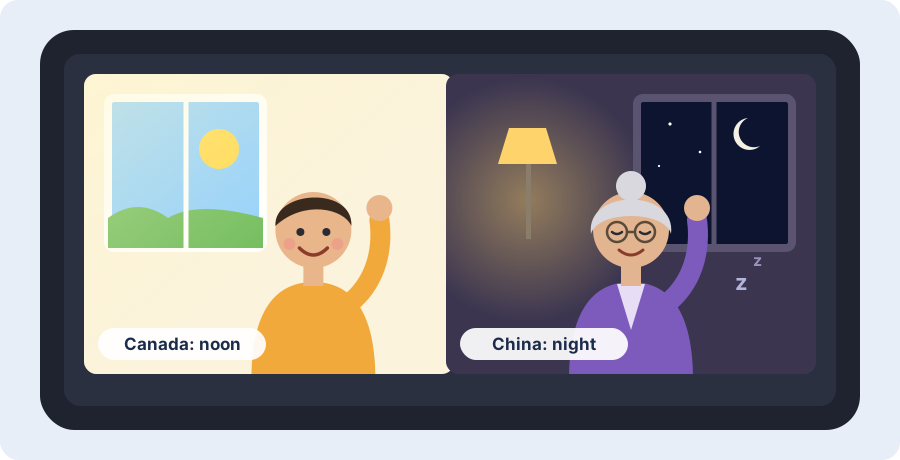
That's because China is on the other side of the Earth. When your side faces the Sun, their side faces away from it. By the time you go to bed, the Earth has turned, and their morning is beginning.
So it is never the same time of day everywhere on the Earth.
Words to know
- spin (or rotation) - the Earth turning around itself, once a day
- sunrise / sunset - the moments your place turns into, and out of, the sunlit half
- horizon - the line where the sky seems to meet the ground or the sea
Try it at home
Use the lamp (the Sun) and the orange (the Earth) again. Stick a small piece of tape on the orange: that's you. In a dark room, hold the orange near the lamp and slowly turn it.
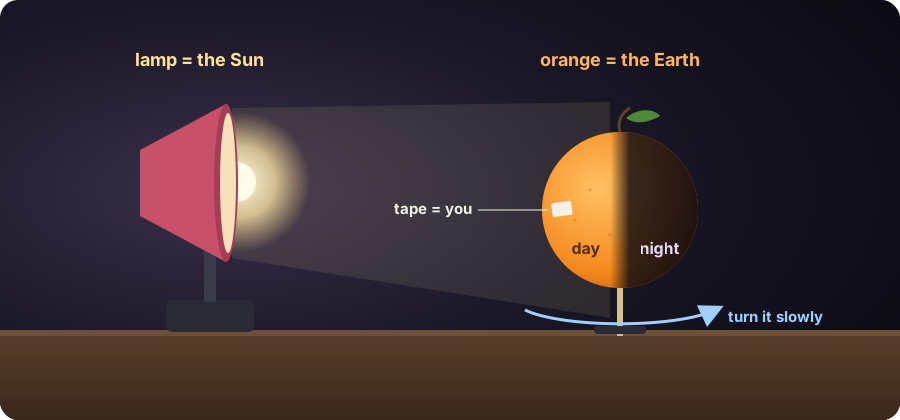
- Watch the tape move from the dark side into the light: sunrise.
- Keep turning until the tape faces the lamp straight on: noon.
- Turn until it slips back into the dark: sunset.
To turn it the way the real Earth turns, imagine the top of the orange is the North Pole and turn it anticlockwise as you look down on that top.
Big idea
The Earth spins once a day. The half facing the Sun has day, the half facing away has night, and the Sun only seems to move across the sky.