Why Is There Something?
Tom is lying on the grass on a clear night, looking up at the stars. There are so many of them. He starts to wonder where they came from, and then where that came from, and so on. Then a bigger question comes to him. Why is there anything at all? Why stars, and grass, and Tom, instead of just... nothing?
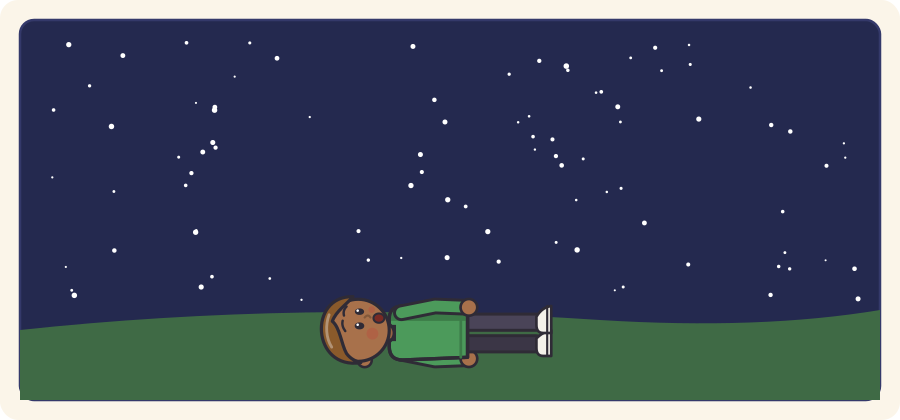
The biggest question
In 1714 the German philosopher Gottfried Leibniz asked it like this: "Why is there something rather than nothing?" He said it is the first question anyone should ask, since nothing would be simpler and easier than something.
The question is hard in a special way. Normally, to explain why something exists, you name its cause: the stars formed from clouds of gas, the clouds came from earlier stars, and so on. But the question is about everything. Any cause you name is one more thing that exists - so it is part of what needs explaining.
Three answers
Something has to exist. Leibniz said there must be something that exists necessarily - something that couldn't fail to exist, the way two plus two couldn't fail to make four, as the Could It Have Been Different? lesson showed. That thing explains the rest. Many people think of God here; others look for it in the laws of nature or in mathematics. This course doesn't take a side. The puzzle for this answer: can anything really exist the way a number "must"?
There is no reason. The world is simply there, and the question asks for more than there is. In a radio debate in 1948, the British philosopher Bertrand Russell said, "the universe is just there, and that's all." The puzzle for this answer: we look for reasons for everything else. Why should we stop at the biggest thing of all?
The question may not be clear. Perhaps "nothing" isn't a real possibility at all, so there is nothing to explain about why we don't have it. The puzzle: can we be sure of that, when "nothing" seems so easy to imagine?
Looking back
This course has asked six big questions. What is real? What makes something the same thing? What makes you you? What makes things happen? Do you choose freely? What is time, and could things have been different?
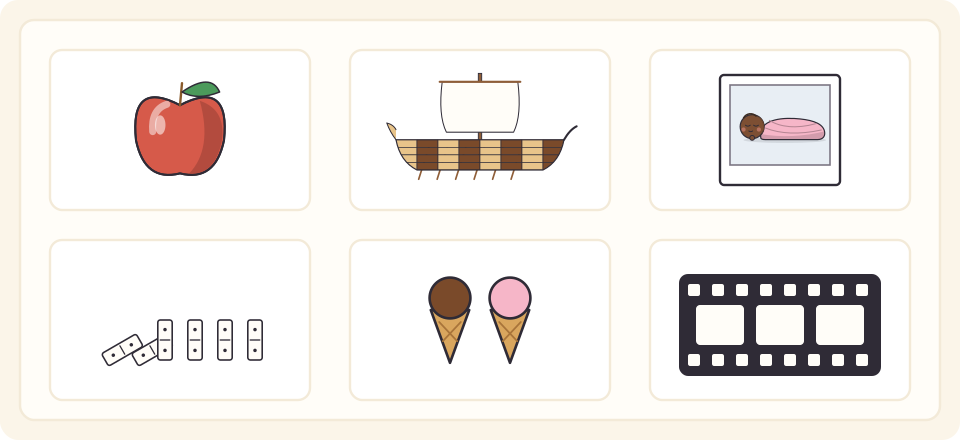
None of them was settled by an experiment, and the course has not told you the answers. But you have seen how metaphysics works on them: ask a clear question, set out the reasons step by step, test each answer with a thought experiment, and find the puzzle every answer leaves. That is how a question no experiment can settle still gets clearer.
Try it at home
- Pick the one question from this course you find most interesting.
- Write down your own answer, and your best reason for it.
- Write down the strongest puzzle for your answer. Then ask someone else what they think.
Words to know
No new words: this lesson brings together the course's words, from metaphysics to necessary.
Big idea
"Why is there something rather than nothing?" may never be answered, but asking it carefully shows what metaphysics does: it takes the questions no experiment can settle, and makes them clearer.