Can You See a Cause?
Tom is playing pool. He hits the white ball, it rolls across the table, it touches the red ball, and the red ball rolls into a pocket. Everyone would say the white ball made the red ball move. But look very closely at what you actually see. Can you see the making?
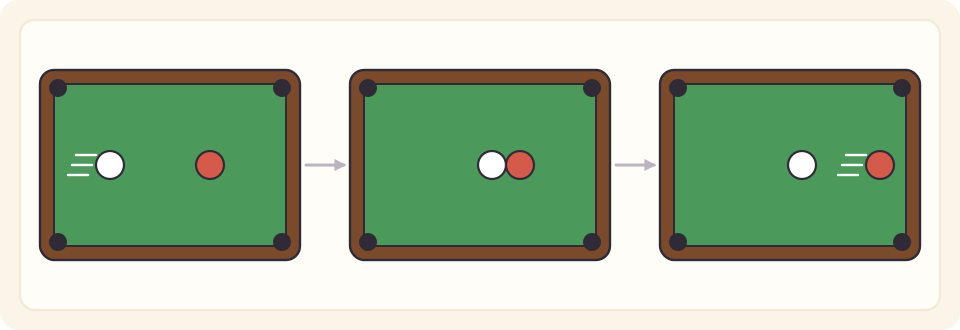
One thing, then another
The Scottish philosopher David Hume asked this question in 1748, using the same example of two balls. He said that when we look, we see the white ball move, then the balls touch, then the red ball move. That is all. We don't see a third thing - the push, or the "making" - passing from one ball to the other. However closely we look, we only see one thing happening, then another.
So how do we know the white ball made the red one move? Hume's answer was: because we have seen things like it many times. Imagine someone who had never seen anything move at all. Shown the white ball rolling for the very first time, they could not tell what would happen next. The red ball might stay still, or fly upwards. Only by seeing the same thing follow again and again do we learn what causes what.
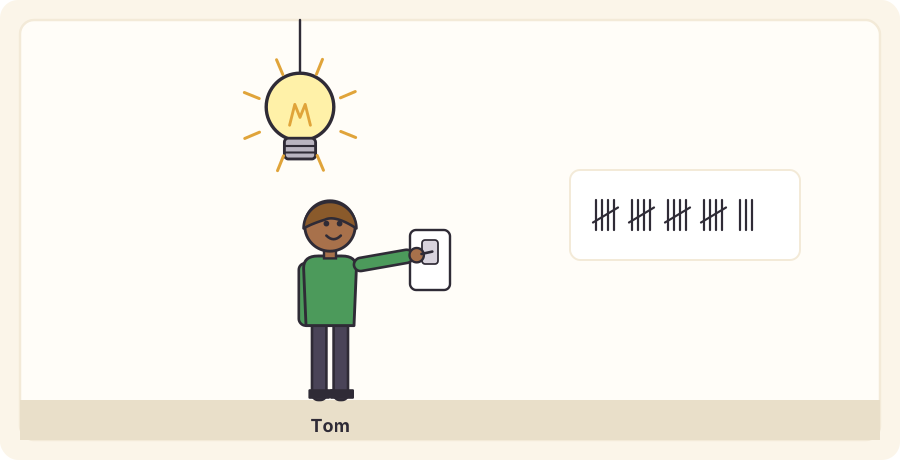
Two answers
A cause is what is always followed by its effect - and our habit of expecting it. This was Hume's own answer. Out in the world, there is only one kind of thing regularly followed by another. The feeling that the first must bring the second is in us: after seeing it many times, our minds expect it.
The puzzle for this answer: night is always followed by day, and day by night. Yet night doesn't cause the day; both are caused by the Earth turning. So being always followed by something isn't enough to be its cause.
Things really have powers to make things happen. Sugar has the power to dissolve in water; a ball has the power to push another. We can't see the power itself, just as we can't see that a glass is breakable until it breaks. But it is there in the things, and it is the reason why the same thing keeps following.
The puzzle for this answer: what is a power, if nobody can ever see one? It seems to be something we believe in only because of what we see follow - which brings us back to Hume.
Try it at home
- Watch something make something else happen: a door closing a draught, a spoon stirring sugar, a ball knocking over a can.
- Write down exactly what you saw, step by step, and nothing else.
- Is the "making" anywhere in your list?
Words to know
No new words: this lesson uses cause and effect from the What Is a Cause? lesson.
Big idea
When one thing makes another happen, we see one event, then another, but never the making itself. Hume said we learn causes from seeing the same thing follow again and again; whether causes are only that, or real powers in things, is still argued about.