Praise and Blame
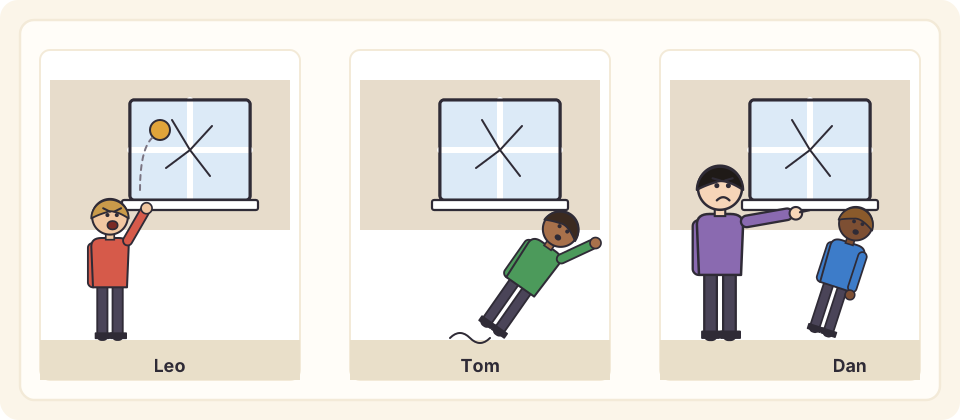
The school window is broken, and three boys were near it. Leo threw a ball at it because he was angry. Tom tripped on his shoelace and fell against it. Dan was pushed into it by a bigger boy. The window is just as broken each time. But the teacher is cross only with Leo. Is that fair, and why?
Being responsible
When someone is the right person to blame for a bad thing they did, or to praise for a good thing, we say they are responsible for it. Leo is responsible for the broken window. Tom isn't: it was an accident. Dan isn't either: the bigger boy is.
The Greek philosopher Aristotle, about 2,350 years ago, noticed two tests that we use. We don't blame someone for what they did if they were forced to do it, or if they didn't know what they were doing.
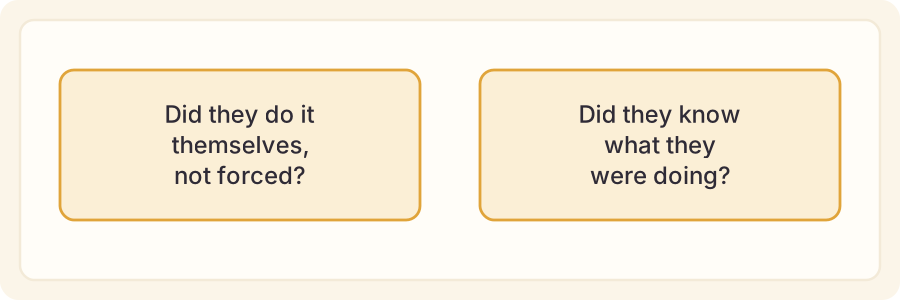
Dan fails the first test: he was pushed. Tom fails the second: he didn't mean to fall, and he didn't know he would. Leo passes both. As Ethics Level 1 showed, blame has to treat like cases alike, and these three cases are not alike where it matters.
Does responsibility need free will?
Now bring back the worry from the Could You Have Done Otherwise? lesson. Suppose determinism is true. Then Leo's anger, and his throw, were fixed by what came before, just like Dan's being pushed. Is Leo really any more responsible than Dan?
Yes, by Aristotle's tests. Leo did it himself, from his own anger, and he knew what he was doing. Dan was forced by someone else. That difference is there whether or not the world is like clockwork. This is the answer of the Free and Caused lesson: what counts is whether the cause was your own wants, not whether there was a cause.
No, not in the deepest way. If Leo could not have done otherwise, then blaming him as if he could have is unfair, some philosophers say. We might still stop him from breaking more windows, and help him learn to handle his anger - as we protect ourselves from storms without blaming them. The puzzle for this answer: it seems to leave no room for praise either, not even for someone brave or kind.
Try it at home
- Think of a time you were blamed, or praised, for something.
- Use Aristotle's two tests: were you forced? Did you know what you were doing?
- Did the blame or praise pass the tests?
Words to know
- responsible - being the right person to praise or blame for what you did
Big idea
We hold people responsible only when they did something themselves and knew what they were doing. Whether that is enough, or responsibility also needs a free will that could have done otherwise, is one of philosophy's oldest open questions.