Could You Have Done Otherwise?
Sam is at the ice cream shop. He looks at the chocolate and at the strawberry for a long time. Then he says, "Chocolate, please." It felt like his choice: he weighed them up, and he could have said "strawberry". Or could he?
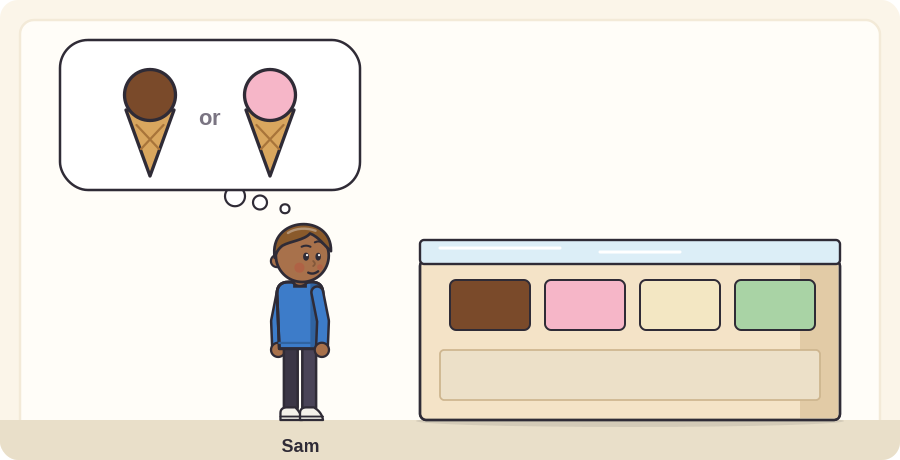
Up to you
Most of the time we feel that what we do is up to us. We choose, and we could have chosen differently. Being able to choose like this, so that what you do is really up to you, is called free will. Many people think free will means exactly this: when you choose, you could have done otherwise.
The worry
But remember the dominoes from the lesson A World Like Clockwork. If determinism is true, everything that happens is fixed by what came before. A choice is something that happens in Sam's mind. So here is the worry, set out step by step:
Everything that happens is fixed by what came before.
Sam's choice is something that happens.
So Sam's choice was fixed before he made it.
So Sam could not have chosen strawberry.
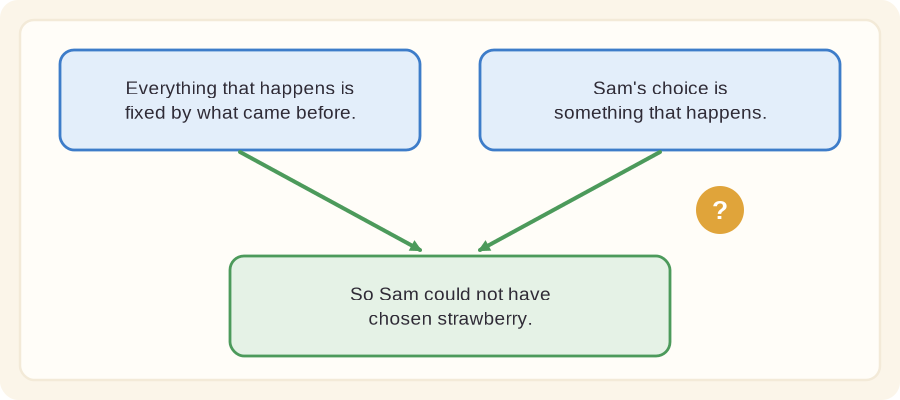
If free will means "could have done otherwise", the argument seems to show that Sam had no free will - and nor does anyone else. The weighing up was real, but its result was fixed all along, like the last domino.
Three ways to answer
Perhaps choices are not fixed. As the clockwork lesson said, many physicists think some tiny events are not fixed by what came before. Perhaps our choices are like that. The puzzle: a choice that happens by chance, like a coin flipping in your head, doesn't seem any more up to you than a fixed one.
Perhaps free will doesn't need that. Maybe being free doesn't mean that nothing caused your choice, but that you caused it, for your own reasons. The next lesson looks at this answer.
Perhaps free will is only a feeling. Some people accept the argument: we feel free, but we are not. The puzzle: then why do we praise and blame each other? The Praise and Blame lesson comes back to this.
Try it at home
- Make a small choice: which sock to put on first, or which fruit to eat.
- Write down why you chose it.
- Then ask: could you have chosen the other one, given everything that was true just before you chose? Write down your answer and your reason.
Words to know
- free will - being able to choose, so that what you do is really up to you
Big idea
We feel that we could have done otherwise. If everything is fixed by what came before, it seems we couldn't. Whether that means there is no free will depends on what free will really is.