Free and Caused
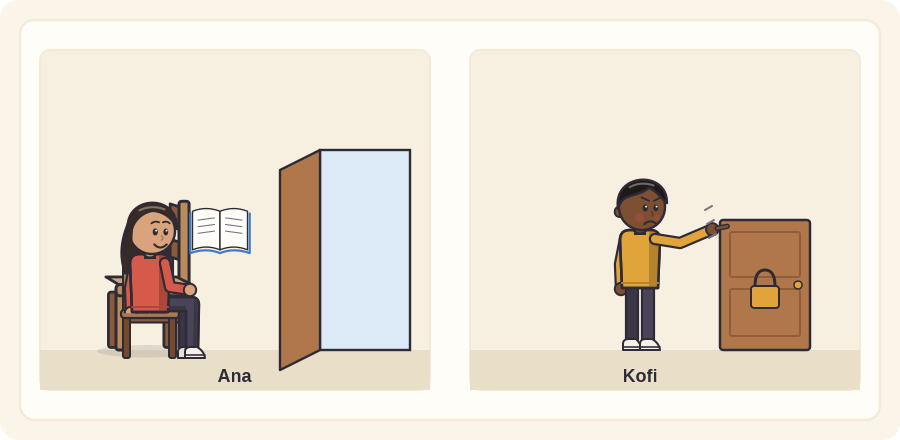
Ana and Kofi have both stayed in their rooms all afternoon. Ana's door is wide open, but she is reading a book she loves and doesn't want to leave. Kofi's door is locked from the outside, and he has been banging on it. Both of them stayed in. Both staying in had causes. But nearly everyone would say that Ana stayed freely, and Kofi did not. What is the difference?
Free means doing what you want
The difference isn't that Ana's staying had no cause. It did: she loves the book. The difference is what kind of cause it was. Ana stayed because of her own wants and reasons. Kofi stayed because something outside him forced him to, against what he wanted.
The English philosopher Thomas Hobbes and, later, David Hume gave this answer. Being free, they said, means doing what you want, for your own reasons, with nothing forcing or stopping you. Hobbes said that water running down a river bed flows freely, though it has to go where the river bed takes it. On this answer, free will fits with determinism: your wants and reasons are causes too, and when they are what move you, you act freely. Philosophers call people who think this compatibilists, because they say freedom and causes are compatible - they can both be true together.
So the worry in the Could You Have Done Otherwise? lesson is answered like this: Sam chose chocolate because he wanted it. That his wanting had causes doesn't make the choice any less his.
Where did the wants come from?
The puzzle for this answer is the next question. Sam wanted chocolate. But where did that want come from?
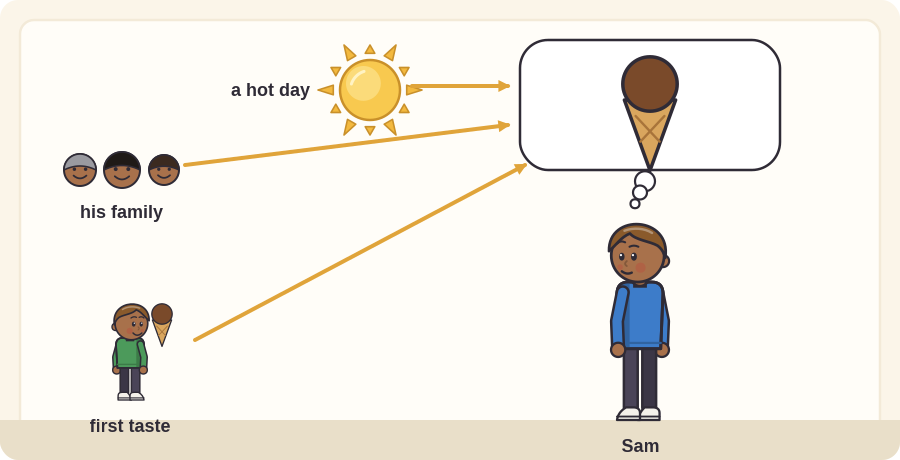
From things he never chose: the family he was born into, the first time he tasted chocolate, the hot day. If his wants were fixed by things that were never up to him, are they really his? Some people say that is no more freedom than the river bed's water has.
The reply: your wants are yours because they are part of you, and you are not stuck with them. You can step back and think about a want - "I wish I didn't want to stay up so late" - and slowly change it. People who can do that, the reply says, have all the free will worth wanting.
Try it at home
- Think of three things you did today.
- For each, ask: did I do it because I wanted to, or because something forced me?
- Pick one want you had today and trace where it came from, as far back as you can.
Words to know
No new words: this lesson uses free will and determinism from earlier lessons.
Big idea
Hobbes and Hume said being free means acting on your own wants, not having no causes - so freedom and determinism can both be true. The puzzle is whether wants that come from things we never chose are really ours.