What Is Real?
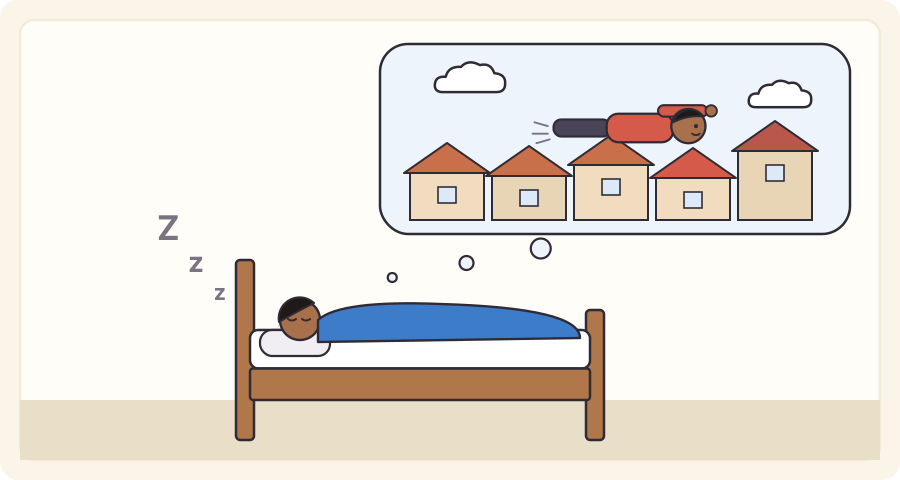
Last night Mei dreamed she could fly. She flew over the roofs of her town, and it felt completely real. Then she woke up in her bed. Her bed felt real too - just as real as the flying had felt a minute before. So how can Mei be sure that this is real, and the dream was not? And what does "real" mean, anyway?
Two kinds of question
Some questions ask how things are. How tall is the tree? Is it raining? What is in the box? To answer them, you look, measure or ask someone who knows.
Other questions go deeper. They ask what there is at all, and what it is to be real. Is a dream real in some way? Is a shadow a thing, or only a place where light isn't? Is the number 7 real, even though nobody has ever seen or touched it? Looking and measuring don't answer these questions, because they are about what looking and measuring find.
The part of philosophy that asks these deeper questions is called metaphysics. The name comes from ancient Greek and means "after the books about nature". Long after the Greek philosopher Aristotle died, the people who collected his writings put his books on these questions after his books on nature, and gave them that name. Today it means the study of what is real and what it is like.
Real in different ways
Look at these five. Which of them are real?
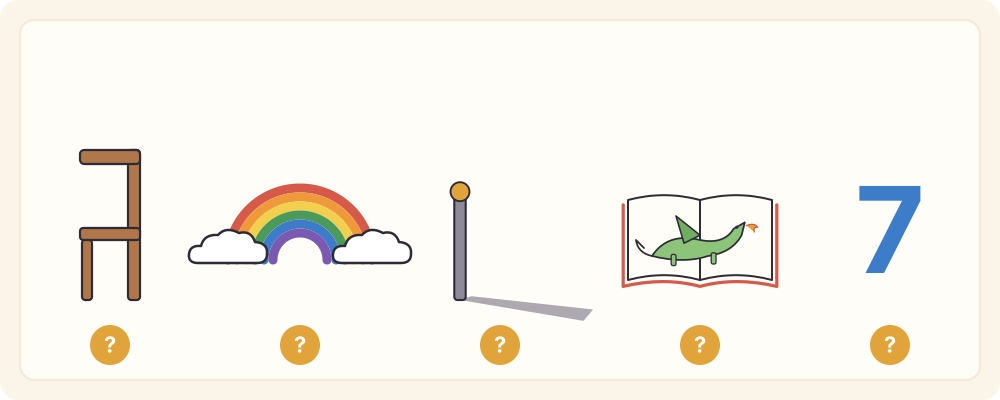
The chair is the easy one. You can sit on it, and so can anyone else. The dragon is easy too, in the other direction: the drawing is real, but there is no dragon. It doesn't exist - there is no such thing in the world.
The other three are harder. A rainbow is really there - everyone can see it, and you can take a photo of it - but you can never walk up to it and touch it. A shadow moves and changes shape, but is it a thing, or just an absence of light? And the number 7 seems real - it is true that 3 and 4 make 7, for everyone, everywhere - but it isn't anywhere.
So "real" may not be one simple thing. Things might be real in different ways. That is the kind of puzzle this course is about.
How metaphysics works
No experiment can decide whether the number 7 exists. Metaphysics works by careful thinking instead: asking clear questions, giving reasons, testing ideas with examples, and looking at every answer thinkers have given. This course will show you the main answers to each question, and what speaks for and against each one. It won't tell you which answer is right. That part is yours.
Try it at home
- Write down ten things you can see or think of right now.
- Sort them into three groups: "real like a chair", "not real at all", and "real, but in a strange way".
- Look at the third group. For each one, write what makes it strange.
Words to know
- metaphysics - the part of philosophy that asks what is real and what it is like
- exist - to be real; to be there in the world
Big idea
Some questions ask how things are; metaphysics asks what there is at all, and what it is to be real. Looking and measuring can't settle these questions, but careful thinking can make them clearer.