Why We Measure
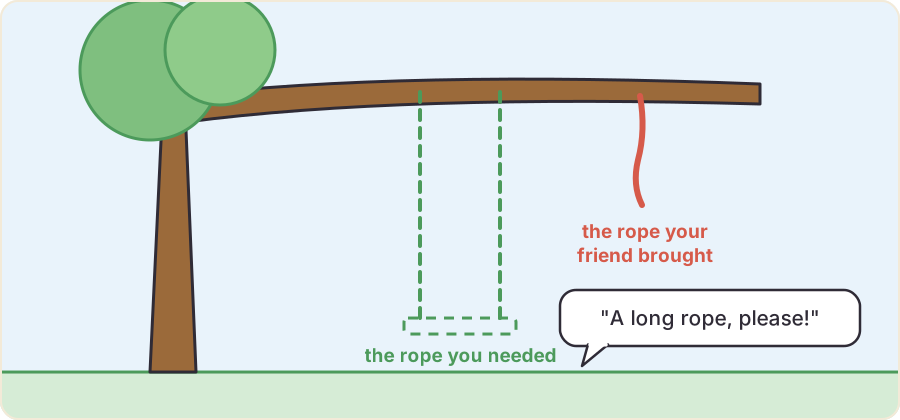
You want to hang a swing from a tree in the garden. You ask a friend to buy the rope on the way home. "How long?" they ask. "Long," you say. "Quite long."
Your friend comes back with a rope. It is long - for a skipping rope. For your swing it is much too short. What went wrong?
"Long" is not enough
Words like long, big, heavy and hot are useful, but they don't mean the same thing to everyone. To you, "long" meant long enough to reach from a high branch down to a seat. To your friend, it meant longer than most ropes in the shop.
The same happens everywhere. A tall child is much shorter than a tall tree. A hot cup of tea is much colder than a hot oven. The word only tells you how a thing compares with what you expected.
Measuring means comparing
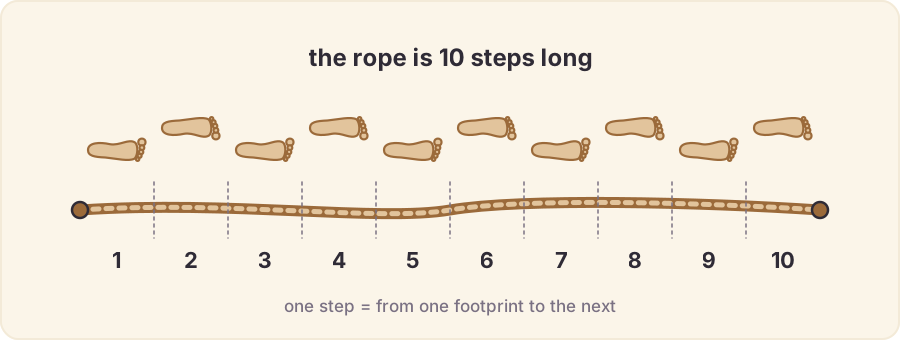
Now say you had told your friend: "The rope must be as long as 10 of my steps." Your friend can't guess wrong any more. In the shop they can lay the rope on the floor and walk along it, counting steps.
That is what measuring is: comparing a thing with something else that both of you know. The answer, "10 steps", is called a measurement.
People have always measured
People needed measurements long before anyone wrote a science book:
- builders, so that walls are straight and stones fit together;
- traders, so that a buyer gets as much cloth or grain as they paid for;
- cooks, so that a recipe tastes the same every time;
- doctors, so that a medicine helps and doesn't harm.
The people who built the pyramids in Egypt, about 4,500 years ago, measured every block of stone with care. Without measuring, the sides of a pyramid would never meet at the top.
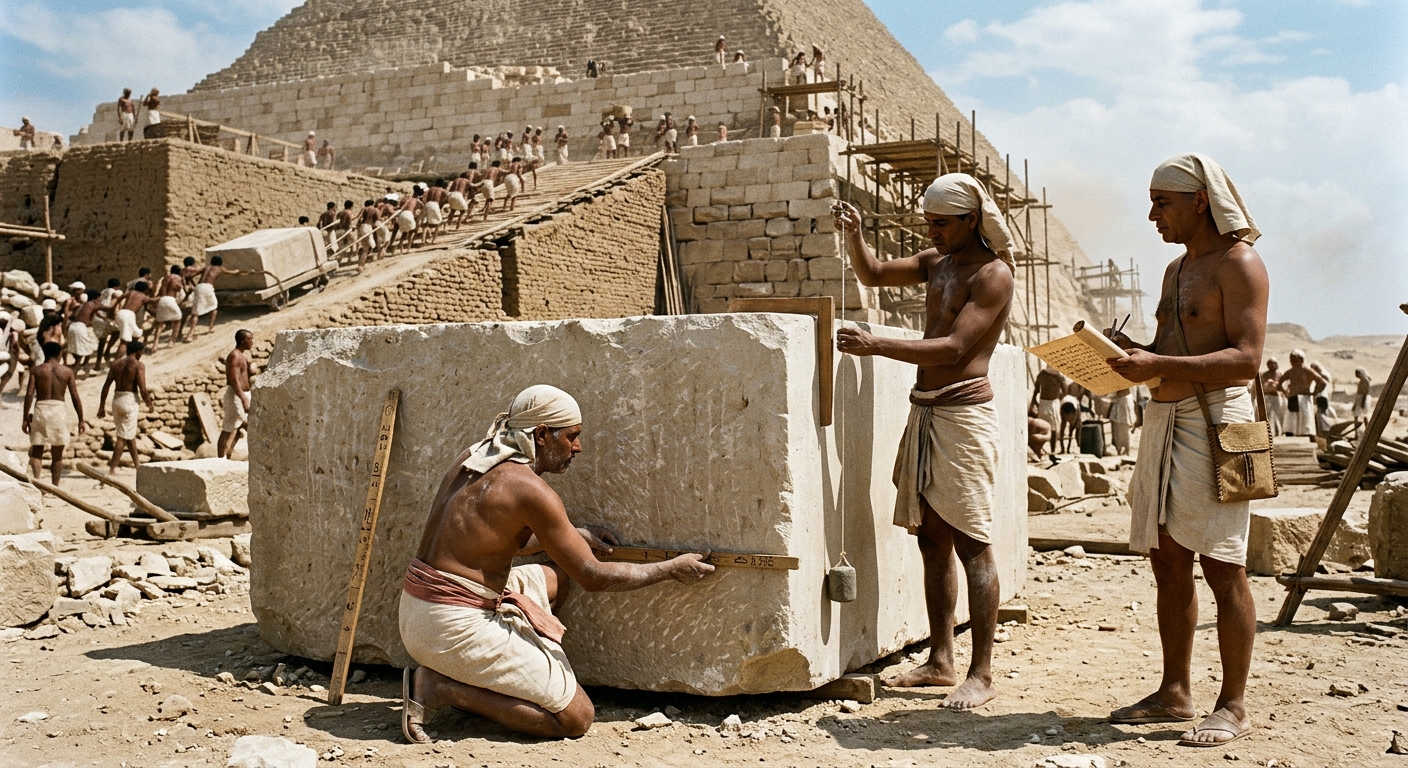
Picture: an illustration of Egyptian builders checking a stone block, about 4,500 years ago.
Try it at home
- Pick a table in your home. Describe how long it is to someone in another room, using only words like "long" and "short". Can they guess?
- Now measure the table by laying your hand along it again and again, and count the hands. Tell them the number. Which answer helped more?
Words to know
- measure - to find out how long, how heavy, how hot (and so on) something is, by comparing it with something known
- measurement - the answer you get when you measure, like "10 steps"
Big idea
Words like "long" and "heavy" mean different things to different people. Measuring means comparing a thing with something we both know, so the answer means the same to everyone.