When Units Go Wrong
In the A Number and a Unit lesson we saw that a number without its unit is useless: "3" and "6" can be the very same table. On a kitchen table that is a small mistake. In 1999 it cost a spacecraft.
A spacecraft goes to Mars
In December 1998, NASA, the United States' space agency, launched the Mars Climate Orbiter. Its job was to go around Mars and study its weather.
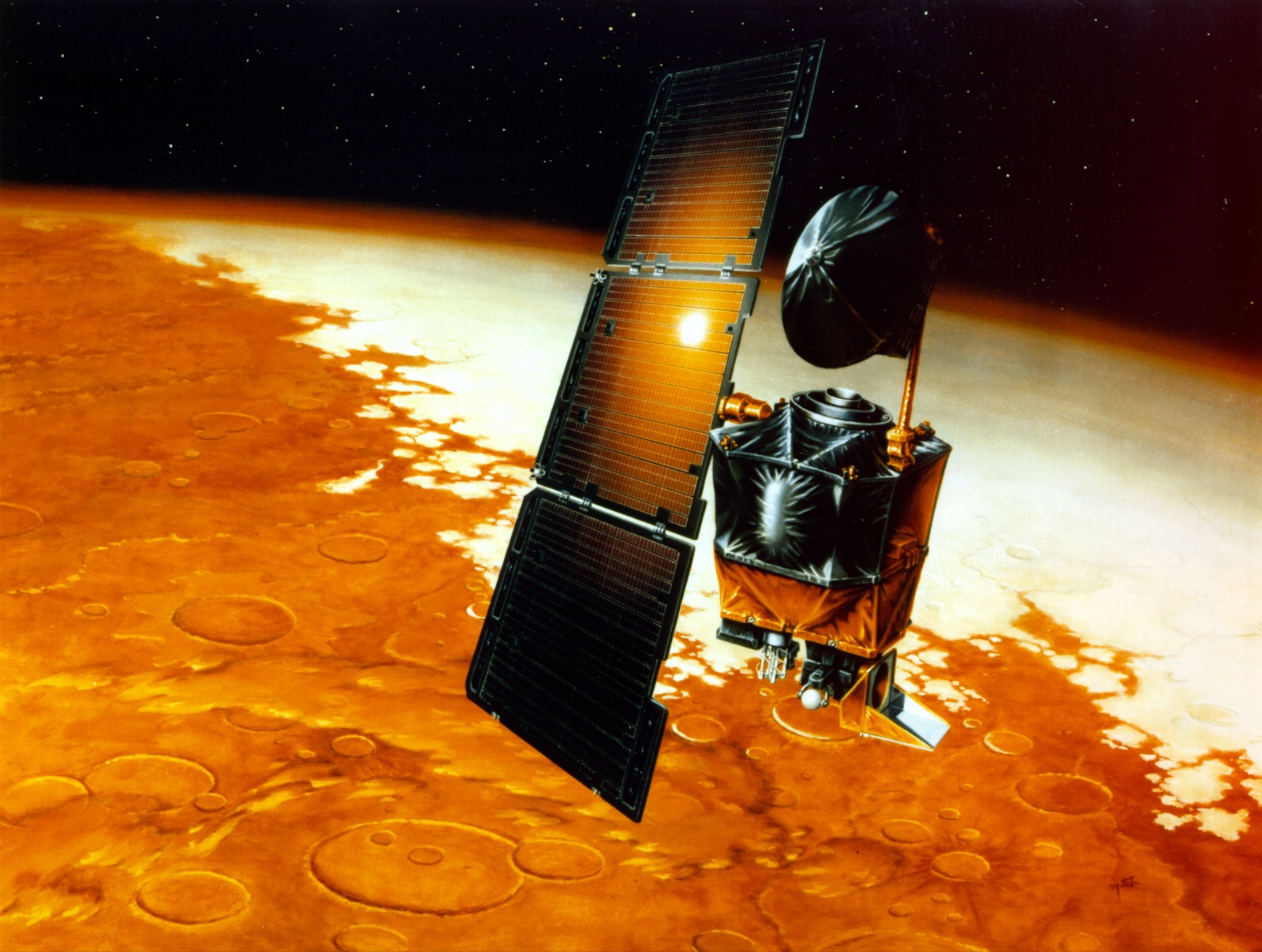
Picture: NASA/JPL, public domain.
During the trip of more than nine months, the spacecraft's small engines fired from time to time to keep it on course. Each time, a computer program on the Earth worked out how strong the push had been. Another program, run by a different team, used those numbers to work out where the spacecraft was.
Two teams, two units
The first program gave its numbers in pound units - the older system from the Inches, Feet and Miles lesson. The second program expected SI units. Nobody noticed.
The SI number for the same push is about four and a half times bigger. So every push was counted as about four and a half times too small. Each mistake was tiny, but over nine months they added up, and nobody knew exactly where the spacecraft really was.
On 23 September 1999 the spacecraft reached Mars. It was meant to pass about 150 km above the surface. Instead it came within about 60 km, deep in the thin air of Mars, and it was never heard from again. A spacecraft that had taken years to build, and cost hundreds of millions of dollars, was lost because two teams used different units.
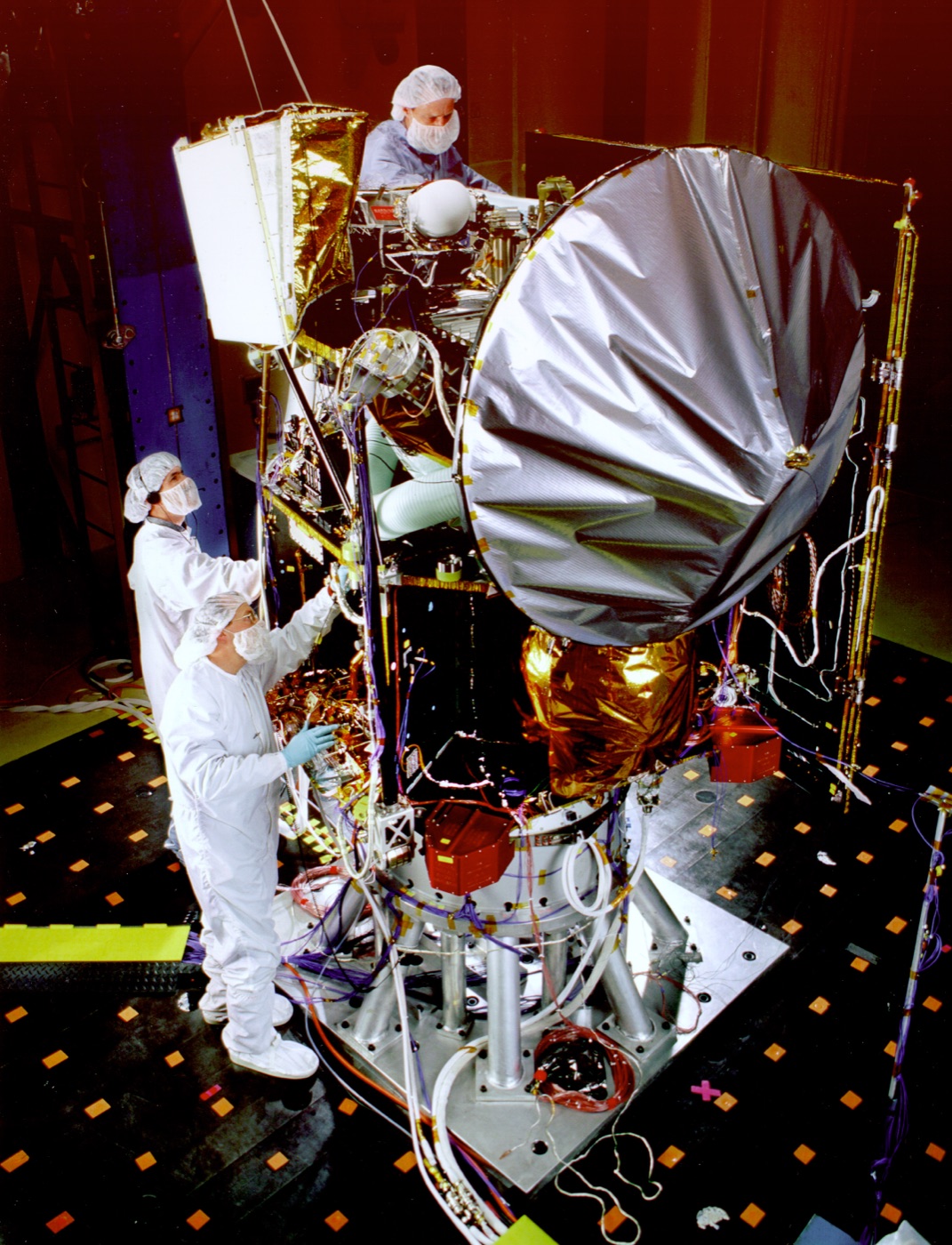
Picture: NASA, public domain.
A plane runs out of fuel
It has happened on the Earth too. In 1983, Canada was changing to metric units, and a new Air Canada plane measured its fuel in kilograms. But the fuel was worked out in pounds. In the Kilogram lesson we saw that a pound is a bit less than half a kilogram. So the plane took off with a bit less than half the fuel it needed.
Halfway through the flight, both engines stopped. The pilots glided the plane, with no engines, to an old airfield at Gimli, in Canada, and landed it. All 69 people on board survived. The plane became known as the Gimli Glider.
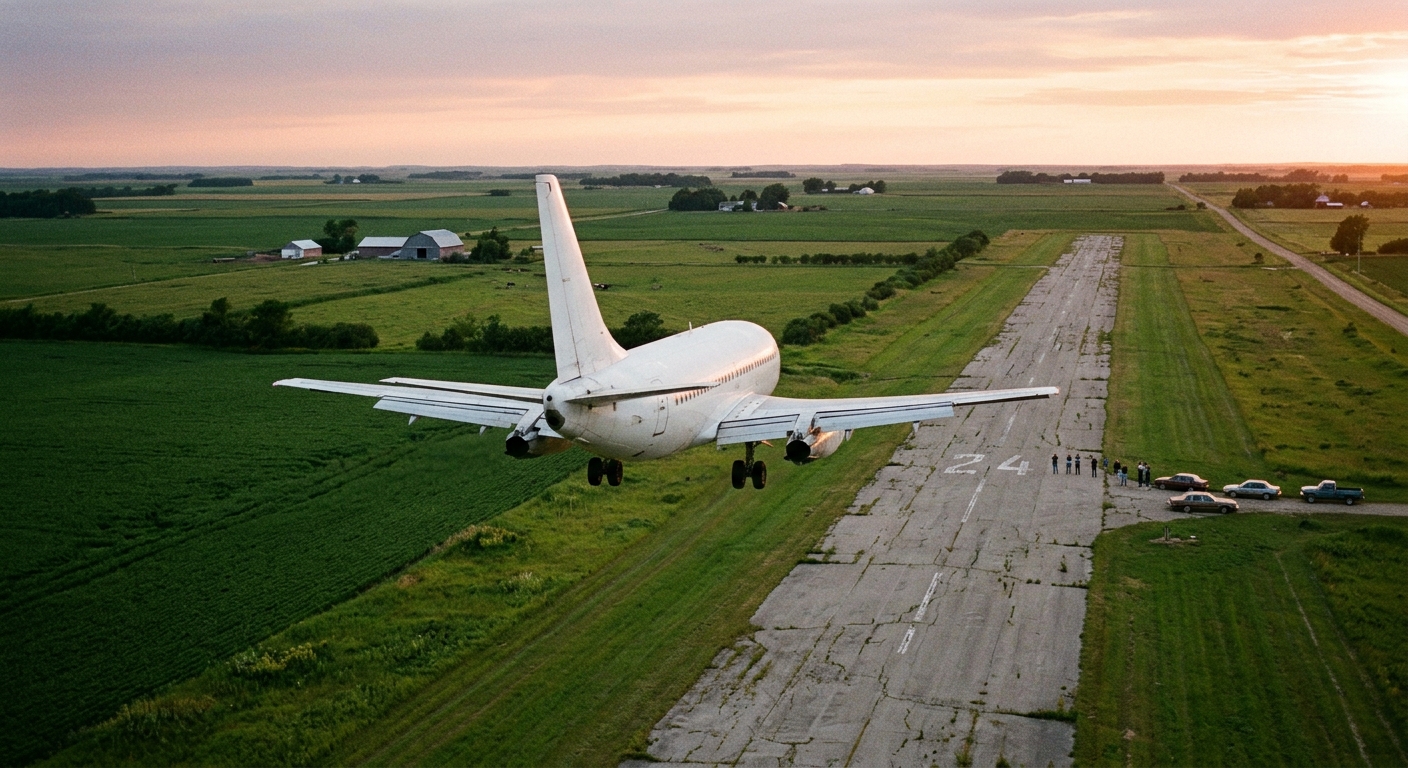
Picture: an illustration of the Gimli Glider coming in to land, 1983.
What we learned
After the Mars Climate Orbiter, NASA checked units more carefully and made sure its teams used SI units. The lesson is the one this course started with: a measurement is a number and a unit, and everyone has to agree on the unit. That is what the SI is for.
Try it at home
- Look at a recipe. Does every amount have a unit? Which ones could be misread?
- Imagine you wrote "Add 2 of sugar" for a friend. List three different things they might do.
Words to know
- NASA - the United States' space agency
Big idea
A spacecraft was lost at Mars in 1999, and a plane ran out of fuel in 1983, because two groups used different units without knowing it. A number means nothing without its unit, and sharing one system, the SI, keeps everyone's numbers the same.