The Metre
Look at a ruler, a tape measure or a door frame marked with a child's height. In most of the world, the numbers on them count metres and parts of a metre. But who decided how long a metre is? And why that length?
A country with too many units
In the Your Foot, My Foot lesson we saw that towns used to have their own foot, their own cubit and their own pound, all a little different. France in the 1700s was one of the worst places for this. A unit could change from one town to the next, and traders and buyers argued about it all the time.
In 1789 a revolution began in France. The people who took charge wanted to change many old things, and the units were one of them. They wanted new units that did not belong to any king or any town, but to everyone.
Taken from the Earth
What does everyone share? The Earth. So in 1791 French scientists chose a length taken from the Earth's own size:
- start at the North Pole;
- go straight down the Earth to the equator (the line around the middle of the Earth), passing through Paris;
- split that distance into ten million equal parts. One part is one metre.
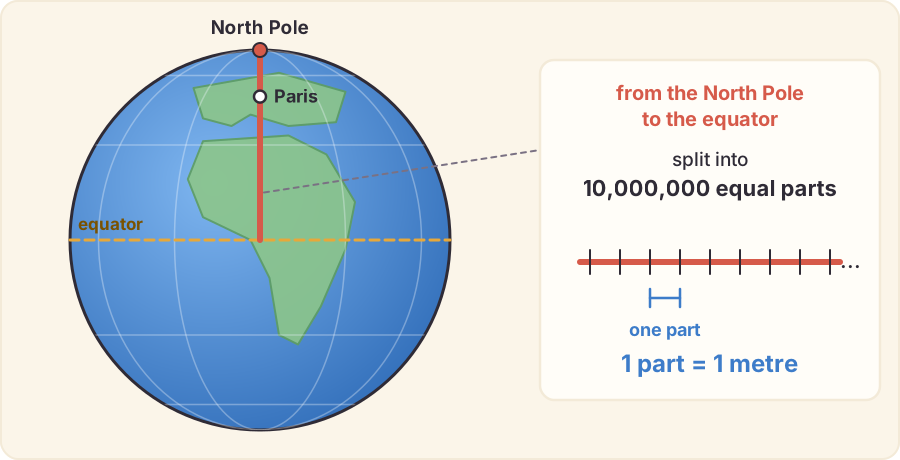
Nobody could walk from the North Pole to the equator. So two astronomers, Jean-Baptiste Delambre and Pierre Méchain, measured one piece of that line very carefully, from Dunkirk in the north of France to Barcelona in Spain. It took them about six years. From their piece, they worked out the whole.
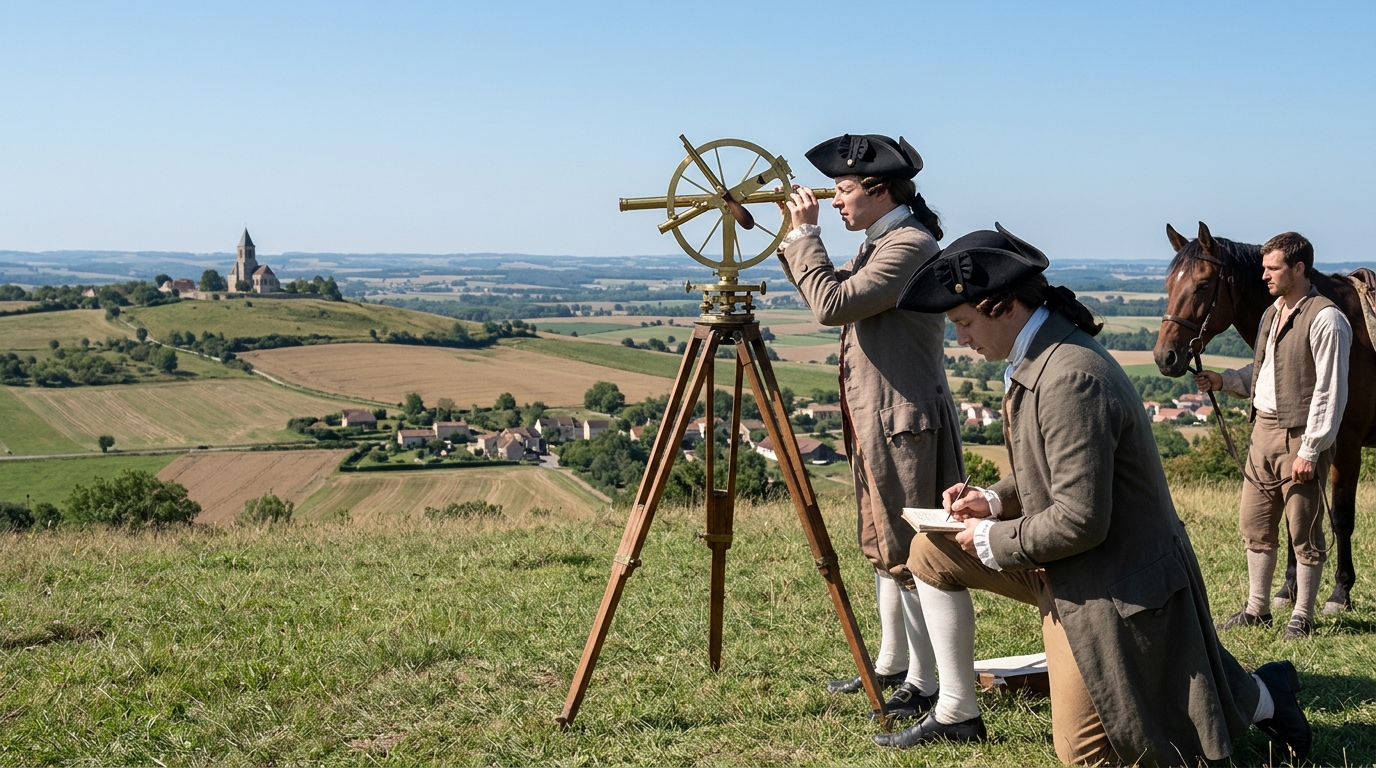
Picture: an illustration of surveyors measuring France in the 1790s.
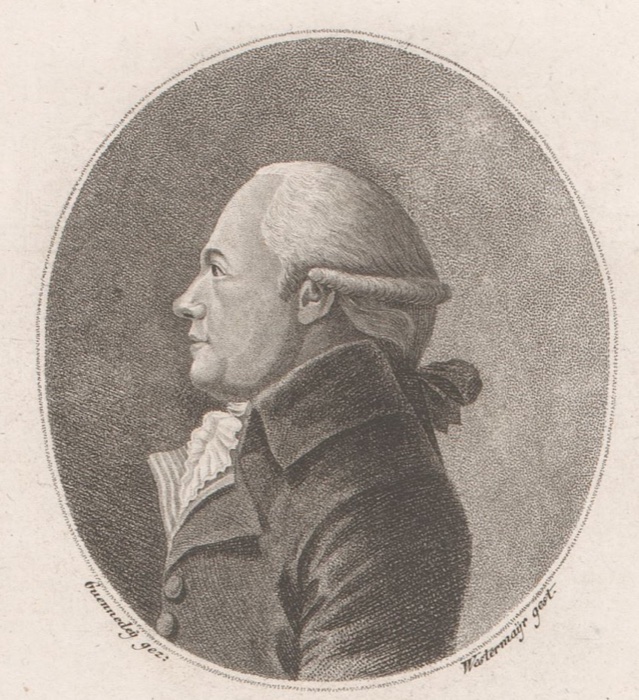
Picture: Jean-Baptiste Delambre, an engraving made in his lifetime (Rijksmuseum, Amsterdam, CC0).
In 1799 the result was made into a bar of platinum metal, kept in Paris: the new standard for the metre. Before that, in 1796, marble copies of the metre had been set into walls around Paris, so anyone could check their own ruler. Two of them can still be seen today.
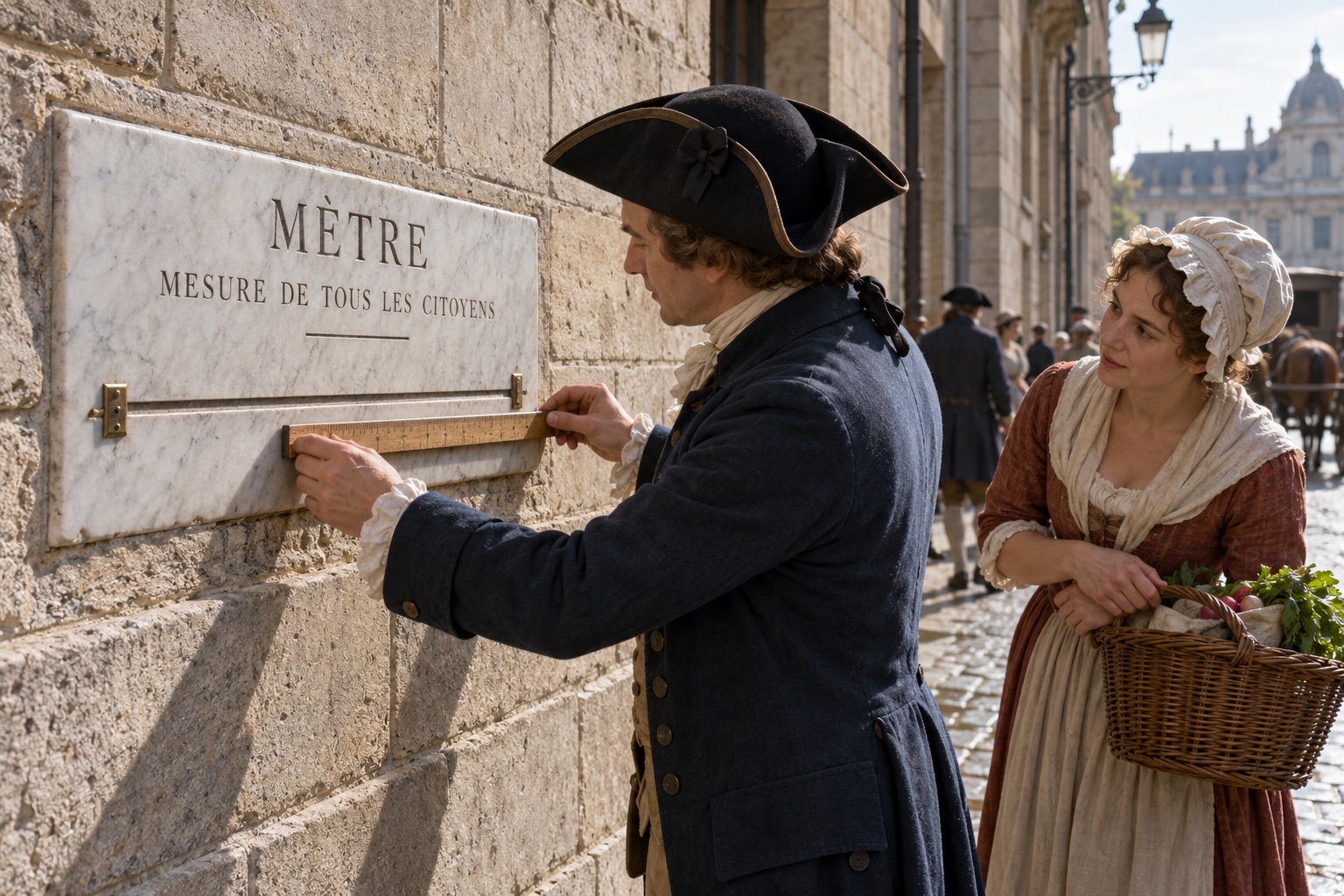
Picture: an illustration of a Parisian checking his ruler against a marble metre, around 1796.
How long is a metre?
The word comes from the Greek metron, "a measure". Its short form, or symbol, is m: "3 m" means "3 metres".
A metre is about:
- the length of a guitar;
- the height of a 4-year-old child;
- a big step for an adult.
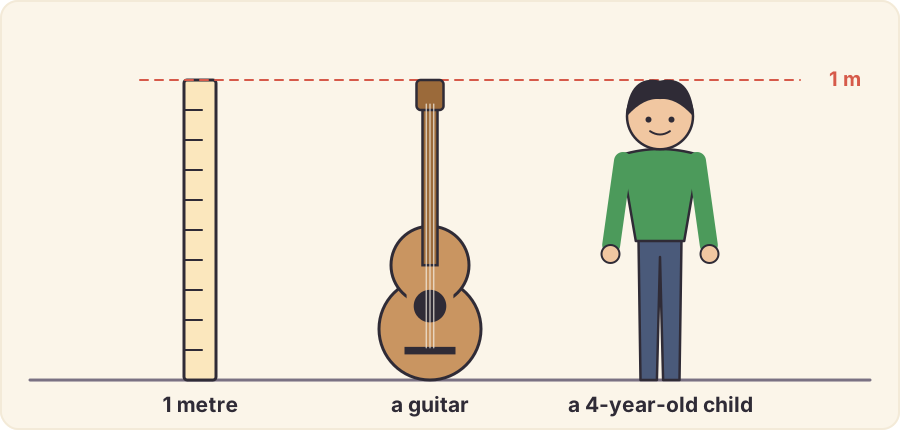
Today the metre is no longer measured from the Earth or from a metal bar. It is fixed using light, which is the same everywhere in the universe. We will see how in a later course.
Try it at home
- Find a tape measure or a metre stick. Lay out one metre on the floor.
- Take one big step next to it. Is your step longer or shorter than a metre?
- Find three things in your home that are about one metre long.
Words to know
- metre - the main unit of length in most of the world; its symbol is m
- equator - the line around the middle of the Earth, halfway between the North and South Poles
- symbol - the short way to write a unit, like m for metre
Big idea
The metre was made in France in the 1790s to belong to everyone. It was taken from the Earth: the distance from the North Pole to the equator, split into ten million parts. A metre is about the length of a guitar.