Leap Years in Python
The leap-year rule from the last lesson is three questions, asked in order:
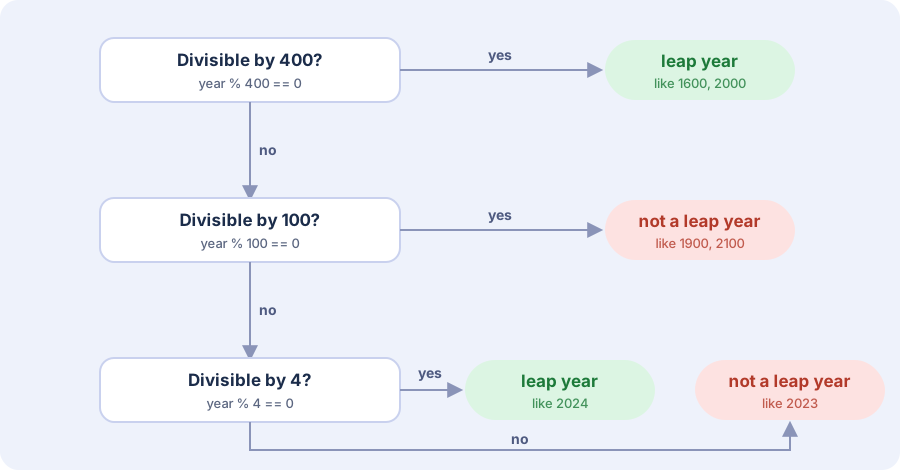
A computer can follow it exactly. First, one tool.
Divisible? Ask for the remainder
In Python, % gives the remainder of a division. 2024 % 4 is 0,
because 4 goes into 2024 exactly. 2023 % 4 is 3. So "is year divisible by
4?" is written:
year % 4 == 0The rule as a function
Each question in the picture becomes an if:
def is_leap(year):
    if year % 400 == 0:
        return True
    if year % 100 == 0:
        return False
    return year % 4 == 0


print(is_leap(2024))  # True
print(is_leap(2023))  # False
print(is_leap(1900))  # False
print(is_leap(2000)) # TrueA return ends the function, so a later check only runs when the earlier ones
didn't decide.
Why the order matters
Here is a version that looks reasonable but asks the questions the other way round:
def is_leap_wrong(year):
    if year % 4 == 0:
        return True
    if year % 100 == 0:
        return False
    if year % 400 == 0:
        return True
return FalseTry 1900. It is divisible by 4, so the first if returns True straight away,
and the century check never runs. Start with the rarest case (400), then the
exception (100), then the common case (4).
In one line
The same rule fits in one expression: divisible by 4, and either not a century year or divisible by 400.
def is_leap(year):
return year % 4 == 0 and (year % 100 != 0 or year % 400 == 0)Python's own calendar module has the same function built in, which is a good
way to check yours:
import calendar

print(calendar.isleap(1900)) # FalseBig idea
A rule with exceptions becomes code by checking the most specific case first.
%turns "divisible by" into a question a computer can answer.